




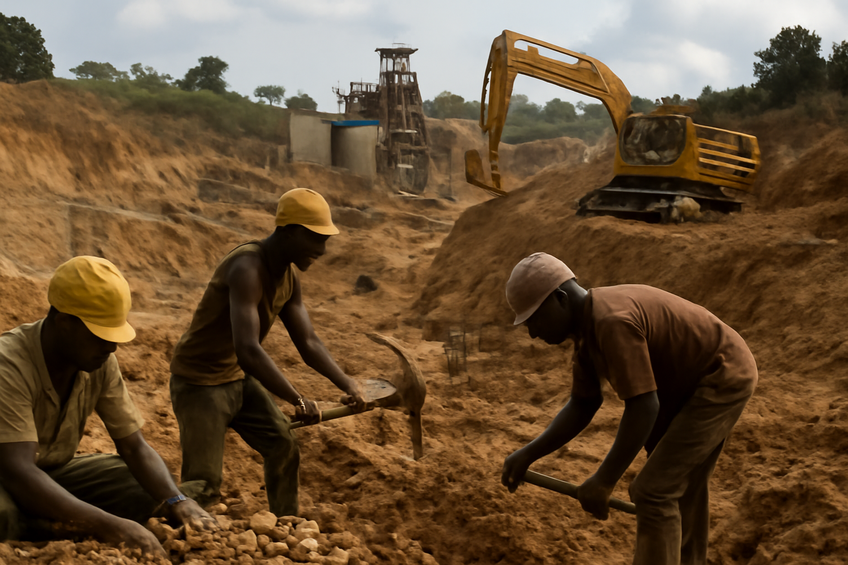
Artisanal gold mining communities across West Africa are intensifying efforts to gain formal recognition from national governments, arguing that legal status is essential to improving safety, environmental standards, and economic returns for hundreds of thousands of small-scale miners. The push comes as the region’s artisanal and small-scale gold mining (ASGM) sector continues to grow in scale and economic significance, drawing increasing attention from regulators, development agencies, and large mining operators alike.
The Scale and Significance of ASGM in West Africa
West Africa is home to some of the world’s most active artisanal mining corridors, spanning countries including Ghana, Mali, Burkina Faso, Guinea, and Côte d’Ivoire. The sector employs an enormous share of rural populations, often serving as the primary or sole source of income in communities far removed from formal employment markets. Gold is the dominant commodity, and artisanal production contributes meaningfully to national export revenues, even if much of it moves through informal or untracked channels.
Despite its economic weight, the sector operates largely in the shadows of formal regulatory frameworks. Miners frequently work without licences, land tenure agreements, or access to official dispute resolution mechanisms. This informality creates a cycle of vulnerability — miners cannot access financing, legal protections, or technical support, which in turn limits their ability to operate more safely or sustainably.
Why Formal Recognition Matters
Legal Protections and Land Security
One of the most pressing demands from artisanal communities is legal recognition of their right to mine specific areas without risk of displacement by commercial operators or state authorities. Without formal tenure, miners face sudden eviction whenever a large-scale concession is granted over the same ground. Formalisation would establish clear boundaries and priority rights, reducing conflicts that have historically turned violent.
Legal status also creates a foundation for contractual relationships. Recognised mining cooperatives can negotiate revenue-sharing arrangements, enter supply agreements with licensed refiners, and seek redress through courts when agreements are broken — none of which is practically available to informal operators.
Access to Finance and Equipment
Formal recognition opens the door to institutional financing, which remains almost entirely unavailable to unregistered miners. With documented licences and operating histories, cooperatives could qualify for credit facilities, equipment leasing, and input supply programmes. Better equipment — particularly for ore processing — directly reduces mercury use, one of the sector’s most serious environmental and public health liabilities.
Safety and Environmental Standards
Artisanal mining, when practiced without technical guidance or regulatory oversight, carries significant risks. Shaft collapses, flooding, and mercury poisoning are persistent hazards. Formalised miners become visible to occupational health authorities and can be reached by training and inspection programmes. Environmental compliance — including land rehabilitation — also becomes enforceable only once operators have a legal identity.
Barriers to Formalisation
Progress has been slow despite broad acknowledgement of the sector’s importance. Several structural barriers continue to obstruct formalisation across the region:
- Bureaucratic complexity: Licensing processes in many West African countries involve multiple agencies, high fees, and lengthy timelines that are impractical for low-income miners operating with minimal capital.
- Overlapping concessions: Large commercial mining licences often already cover ground where artisanal miners are active, creating jurisdictional conflicts that governments are slow to resolve.
- Distrust of authorities: Historical patterns of enforcement focused on eviction and seizure — rather than integration — have made many communities wary of engaging with state registration processes.
- Weak institutional capacity: Mining ministries in several countries lack the staffing and resources to process, monitor, and support a large volume of small-scale licence applications.
- Informal supply chain incentives: Traders and intermediaries who profit from opaque gold flows have limited interest in regulatory reforms that would increase traceability.
Regional and International Dimensions
The formalisation agenda is not playing out in isolation. International frameworks, including the Minamata Convention on mercury and various responsible sourcing standards for gold, are increasing pressure on producing countries to demonstrate supply chain traceability. Refiners and jewellery brands sourcing African gold face growing due diligence obligations, which effectively demands that upstream production be documentable and compliant.
Development finance institutions and bilateral donors have channelled funding into ASGM formalisation programmes, though results have been mixed. Initiatives that work directly with existing community structures and cooperatives — rather than imposing externally designed systems — have generally shown more durability. Regional bodies such as ECOWAS have also signalled interest in harmonising small-scale mining regulations across member states, which could reduce the competitive disadvantage that tightly regulated miners face relative to informal counterparts in neighbouring countries.
The Role of Large-Scale Operators
Major mining companies operating in West Africa increasingly recognise that artisanal communities adjacent to their concessions are a stakeholder group that cannot be managed through exclusion alone. Community relations strategies that support formalisation — by helping miners access training, equipment, or legal assistance — can reduce encroachment on concession boundaries while generating broader goodwill. Some operators have piloted structured coexistence agreements, though scaling these models remains a challenge.
As West African governments face simultaneous pressure from international sourcing standards, domestic employment needs, and environmental commitments, the case for meaningful ASGM formalisation is becoming harder to defer. Communities that have long operated at the margins of the formal mining economy are demanding a seat at the regulatory table — and the structural forces shaping the global gold market may finally be aligned enough to help them get one.


