




By Jamie Hyland, MiningIR
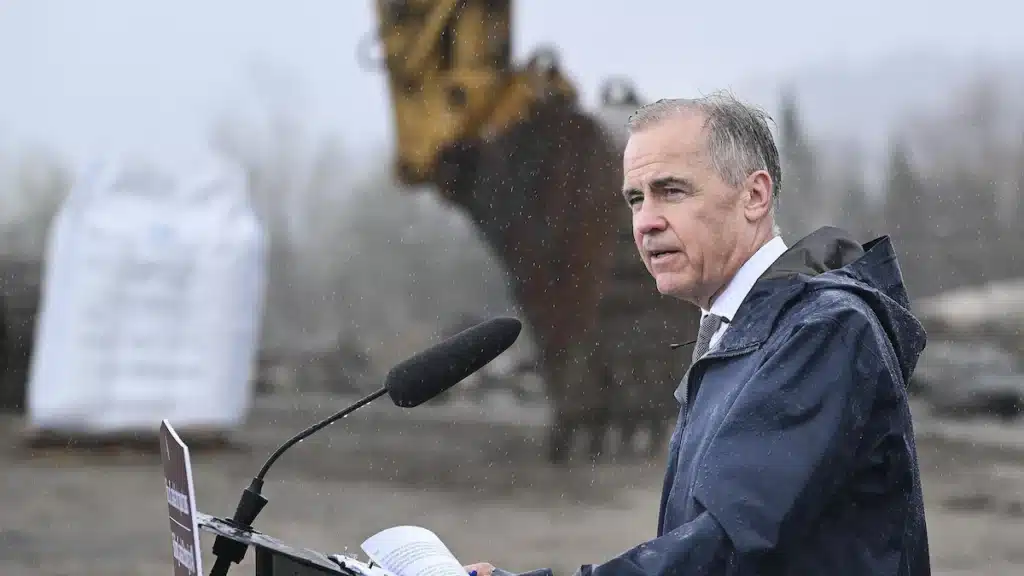
Canada is accelerating its push to become a global leader in critical minerals, with Prime Minister Mark Carney officially breaking ground on Nouveau Monde Graphite’s Matawinie Mine in Québec — a project poised to become the largest graphite mine in North America and the largest in the G7.
The announcement marks a significant milestone for Canada’s critical minerals strategy as governments worldwide race to secure reliable supply chains for electric vehicles, battery storage, defence technologies, and advanced manufacturing. Located in Saint-Michel-des-Saints, Québec, the Matawinie Mine is expected to produce up to 106,000 tonnes of graphite annually once operational.
“Canada has what the world wants – and we’re moving at speed to get it to market. The Matawinie Mine will position Canada as a choice supplier of graphite in a world where demand is rapidly outpacing supply. It will create more than a thousand good career opportunities, strengthen our supply chains, and build a stronger, more competitive, more independent Canadian economy for all.” — The Rt. Hon. Mark Carney, Prime Minister of Canada
Graphite has rapidly emerged as one of the most strategically important minerals in the global energy transition. While lithium often captures headlines, graphite is an essential component in virtually every lithium-ion battery currently manufactured. Demand for battery-grade graphite is expected to surge over the coming decade as EV adoption accelerates across North America, Europe, and Asia.
Advertisement
The Government of Canada emphasized the importance of building domestic supply chains and reducing dependence on foreign-controlled critical mineral markets. The project was referred to Canada’s Major Projects Office just six months ago, highlighting Ottawa’s effort to accelerate permitting and financing for nation-building resource projects.
“Canada has what the world wants – and we’re moving at speed to get it to market,” stated Prime Minister Mark Carney. “The Matawinie Mine will position Canada as a choice supplier of graphite in a world where demand is rapidly outpacing supply.”
The scale of government support behind the project underscores how critical minerals have become central to national economic and geopolitical strategy. The federal government has committed to a seven-year offtake agreement for 30,000 tonnes annually of graphite concentrate from the project while Export Development Canada and the Canada Infrastructure Bank are supporting development through a combined $459 million financing package.
Importantly, the Matawinie Mine is designed as part of a fully integrated Canadian graphite supply chain. NMG plans to connect the mine directly with a downstream battery material processing facility in Bécancour, Québec, creating Canada’s first integrated graphite operation from extraction through refining. Both facilities are expected to operate primarily using Québec’s hydroelectric power grid, significantly reducing emissions compared to many international graphite operations.
“Today, Canada is delivering on its commitment to get major projects built, strengthening our position as an energy superpower and supporting the strongest economy in the G7. In November, we referred the Matawinie Mine to the Major Projects Office, and six months later, construction is underway to bring Québec graphite to markets at home and abroad. This project will support advanced manufacturing, clean technology, and defence supply chains, while creating good jobs and long-term economic opportunities for Canadians. Shovels are in the ground, and our plan is working.” — The Hon. Tim Hodgson, Minister of Energy and Natural Resources
Advertisement
For investors, the announcement reinforces the growing importance of North American critical minerals projects as governments increasingly prioritize supply chain security and domestic resource development. The project is expected to create more than 1,000 jobs and attract nearly $2 billion in investment into Québec’s economy.
Nouveau Monde Graphite Founder, President and CEO Eric Desaulniers described the groundbreaking as “a defining milestone” in the company’s strategy to responsibly produce materials powering the energy transition.
As Western nations continue seeking alternatives to concentrated foreign supply chains, projects like Matawinie may represent a broader shift toward vertically integrated, domestic critical mineral ecosystems. For Canada, the message is becoming increasingly clear: the race to secure the future of battery materials is underway, and the country intends to play a leading role.
Advertisement


