





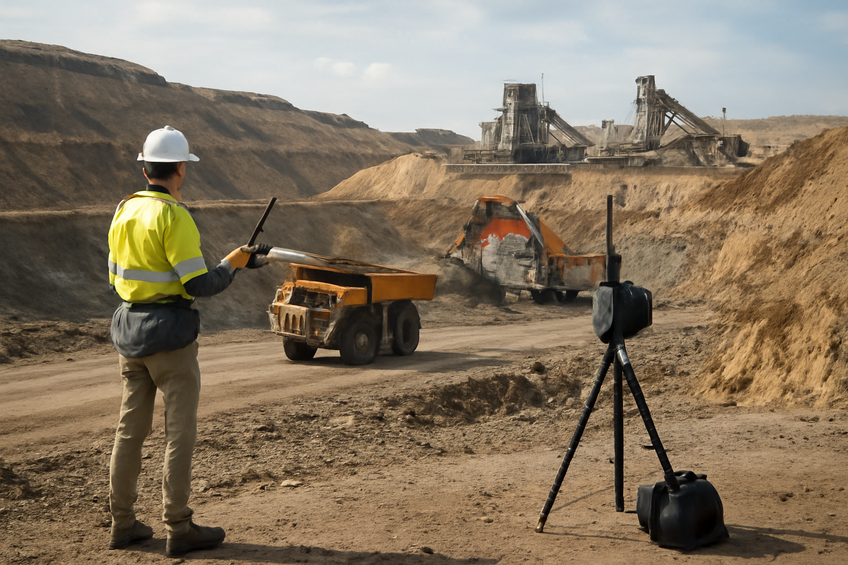
From Reactive to Predictive: A Shift in Underground Safety
Seismic monitoring technology has fundamentally altered the way hard rock mines manage ground control risk, moving operations away from reactive incident response toward real-time, predictive hazard management. In an industry where rockbursts and seismic events remain among the most serious threats to worker safety, the ability to detect, locate, and interpret ground movement as it happens represents a significant operational advance.
Hard rock mining environments — particularly deep-level gold, platinum, copper, and nickel operations — are inherently prone to seismic activity. The combination of high in-situ stress, excavation geometry, and blasting cycles creates conditions where energy can accumulate and release suddenly, sometimes with fatal consequences. Modern seismic monitoring systems are designed to give geotechnical engineers and mine management the information they need to intervene before a hazard becomes a disaster.
How Modern Seismic Monitoring Systems Work
At their core, seismic monitoring networks in mines consist of arrays of sensors — typically geophones or accelerometers — installed throughout the underground workings. These sensors detect micro-seismic events, including those far below the threshold of human perception, and transmit data continuously to surface processing systems. The density and placement of the sensor array directly determine how accurately events can be located and how small an event can be reliably detected.
Processing software triangulates event locations, calculates source parameters such as magnitude and energy release, and builds a continuously updated picture of seismic activity across the mine. Geotechnical teams use this data to identify clusters of activity, track changes in seismic rates, and flag areas where stress is migrating toward active excavations.
Key Components of an Effective System
- Sensor arrays: High-sensitivity geophones and triaxial accelerometers positioned to maximize spatial coverage of active mining areas.
- Real-time data transmission: Wired or wireless telemetry that delivers continuous data streams to surface servers with minimal latency.
- Source location algorithms: Software capable of accurately pinpointing events in three dimensions, often to within metres in well-calibrated networks.
- Source parameter analysis: Tools for calculating energy, moment magnitude, and seismic hazard indices that inform ground control decisions.
- Automated alerting: Threshold-based alarm systems that notify geotechnical staff and trigger re-entry protocols when activity exceeds defined limits.
Integration With Ground Control and Mine Planning
The greatest value of seismic monitoring is realized when the data is integrated into broader ground control programs rather than treated as a standalone surveillance function. Leading operations use seismic data alongside numerical modelling, geological mapping, and stress analysis to create dynamic ground control management plans that can be updated as mining progresses.
Mine planning teams are increasingly incorporating seismic hazard assessments into decisions about extraction sequence, pillar design, and the location of travel ways and infrastructure. By understanding where seismic energy is most likely to concentrate, engineers can design mining sequences that minimize stress build-up and reduce the probability of large seismic events near occupied areas.
Re-entry Protocols and Real-Time Decision Making
One of the most direct safety applications is the enforcement of re-entry protocols following blasting or significant seismic events. Automated monitoring systems can impose temporary exclusion zones and track the decay of seismic activity rates over time, giving supervisors an objective, data-driven basis for deciding when it is safe to return workers to an affected area. This replaces the reliance on subjective judgment and fixed time-based waiting periods that characterized earlier practice.
Some operations have moved toward fully integrated control room environments where seismic data is displayed alongside ventilation, production, and personnel tracking systems, allowing shift supervisors to manage safety across multiple dimensions from a single interface.
Emerging Technologies Enhancing Seismic Analysis
The application of machine learning and advanced signal processing is beginning to expand what seismic monitoring networks can deliver. Algorithms trained on large event databases are improving the automatic classification of seismic signals, distinguishing genuine rock mass events from blast noise, electrical interference, and mechanical vibration with greater reliability than earlier rule-based filters.
Fiber-optic distributed acoustic sensing is another development gaining attention in the industry. By converting existing fiber-optic cable infrastructure into a continuous linear sensor, distributed acoustic sensing offers dense spatial coverage without the cost and complexity of deploying individual sensor nodes — a potentially significant advantage in large or geometrically complex operations.
Cloud-based data platforms are also changing how seismic information is managed and reviewed. Centralized storage and remote access allow specialist geotechnical consultants to analyze data from multiple sites simultaneously, and enable corporate technical teams to apply consistent interpretation standards across a portfolio of operations regardless of geography.
Regulatory Expectations and Industry Standards
Mining regulators in major hard rock producing jurisdictions have progressively tightened requirements around seismic monitoring, particularly at deep operations with a documented history of seismic hazard. Requirements typically address minimum sensor network standards, data retention, event reporting thresholds, and the qualifications of personnel responsible for interpretation. Operations that invest in high-quality monitoring infrastructure are generally better positioned to demonstrate compliance and to defend ground control decisions under regulatory scrutiny.
Industry bodies and technical associations have contributed guidelines and best-practice frameworks that help operators benchmark their monitoring programs against peer operations, driving gradual improvement in standards across the sector.
As hard rock mining continues to push into deeper, higher-stress ground in pursuit of ore reserves, the role of seismic monitoring will only grow in strategic importance. Advances in sensor technology, data analytics, and system integration are steadily improving the resolution and actionability of seismic data, and operations that treat monitoring as a core engineering discipline rather than a compliance checkbox will be best placed to protect their workers and their productivity in increasingly challenging underground environments.


