




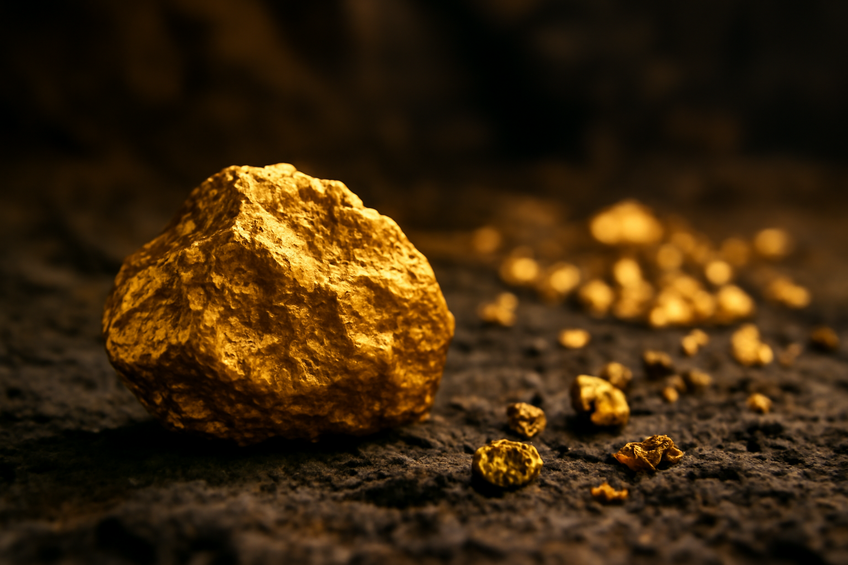
The global mining industry has witnessed some extraordinary moments over the past ten years. From remote deserts to deep underground mines, massive gold discoveries have reshaped economies, attracted billions in investment, and redefined what we know about Earth’s geological potential. These finds didn’t just make headlines — they fundamentally changed the way mining companies operate, explore, and plan for the future.
Whether you’re an investor, a geology enthusiast, or simply someone fascinated by the allure of gold, these ten groundbreaking discoveries are worth knowing about. Let’s dive into the biggest gold finds of the last decade and explore why they matter so much to the global mining landscape.
Why Major Gold Discoveries Still Matter in the Modern Era
In an age of cryptocurrency and digital assets, gold remains one of the world’s most valuable and sought-after commodities. Central banks still hoard it, investors still trust it, and industries still need it. When a major new gold deposit is discovered, it sends ripples through financial markets, local economies, and geopolitical relationships. The last decade has proven that despite centuries of mining, the Earth still holds remarkable secrets beneath its surface.
1. Ivanhoe Mines’ Kamoa-Kakula Discovery — Democratic Republic of Congo
While primarily a copper discovery, the broader geological surveys in the DRC’s Kamoa region also revealed significant gold-bearing structures that caught the attention of the global mining community. Ivanhoe Mines, led by Robert Friedland, pushed exploration deep into Central Africa and found polymetallic deposits that included notable gold concentrations. The discovery attracted massive foreign investment into the region and prompted a re-evaluation of sub-Saharan Africa’s untapped mineral wealth.
Impact on the Mining Industry
This discovery accelerated interest in deep geological exploration across Central Africa. It also demonstrated that large-scale mining operations could be feasibly developed in politically complex regions, setting a precedent for future exploration ventures in similar environments.
Advertisement
2. Hemi Gold Deposit — Pilbara Region, Western Australia
Discovered by De Grey Mining in 2020, the Hemi gold deposit in Western Australia’s Pilbara region is arguably one of the most significant gold finds of the entire decade. The deposit sits within the Mallina Gold Project and contains an estimated resource of over 9 million ounces of gold. What made Hemi particularly remarkable was its intrusion-related gold system — a geological style rarely associated with major gold deposits in Australia.
Why Hemi Was a Game-Changer
De Grey Mining’s share price skyrocketed almost overnight following the announcement, making early investors extremely wealthy. More importantly, Hemi opened up the Pilbara region as a new gold exploration frontier. Previously overlooked in favor of Western Australia’s traditional goldfields, the Pilbara suddenly became one of the hottest exploration addresses on the planet. The discovery proved that world-class deposits can still be found in well-explored continents.
3. Montagne d’Or — French Guiana
The Montagne d’Or project, jointly owned by Columbus Gold and Nordgold, represents one of the most talked-about gold discoveries in South America’s northeastern region. With estimated reserves exceeding 4 million ounces, this open-pit project has been at the center of environmental and political debate in France. The deposit’s size and grade made it economically compelling, but its location within the Amazon rainforest created fierce opposition from environmental groups.
The Environmental Controversy That Followed
Montagne d’Or became a symbol of the ongoing conflict between resource extraction and environmental conservation. The French government ultimately became involved in deciding the project’s fate, making it one of the most politically charged mining stories of the decade. Regardless of its development status, the discovery itself highlighted the rich geological potential of the Guiana Shield.
4. Windfall Lake Gold Project — Quebec, Canada
Osisko Mining’s Windfall Lake deposit in Quebec’s Urban-Barry greenstone belt emerged as one of Canada’s most exciting gold discoveries in recent years. The deposit boasts high-grade gold mineralization with grades consistently exceeding 8 grams per tonne — considered exceptional by industry standards. Total inferred resources have grown steadily, attracting attention from major gold producers worldwide.
Advertisement
High-Grade Gold in a Tier-One Jurisdiction
What makes Windfall Lake especially compelling is its location. Quebec is widely regarded as one of the world’s best mining jurisdictions, offering political stability, established infrastructure, and a skilled workforce. High-grade deposits in safe jurisdictions are extraordinarily rare, making Windfall one of the most coveted undeveloped gold assets on the planet. Gold mining giant Agnico Eagle eventually made a significant investment in the project, underlining its world-class status.
5. Donlin Gold — Alaska, United States
Though exploration at Donlin began before the decade started, significant resource upgrades and new discoveries throughout the 2010s and early 2020s cemented its place among the most important gold finds of our time. Jointly owned by NovaGold and Barrick Gold, the Donlin Gold project in southwestern Alaska holds one of the largest known undeveloped gold deposits in the world, with resources exceeding 39 million ounces.
A Deposit That Defies Scale
Donlin Gold is often described as a “once-in-a-generation” deposit due to its sheer size and the quality of its ore. The project’s remote location in Alaska has delayed development, but ongoing feasibility studies and environmental assessments suggest it could become one of the world’s premier gold mines within the coming decade. Its scale has already influenced how mining companies think about developing remote, large-tonnage deposits.
6. Gruyere Gold Mine — Western Australia
The Gruyere discovery by Gold Road Resources in 2015 was one of Australia’s largest gold finds in decades. Located in Western Australia’s Yamarna Greenstone Belt — a previously underexplored region — the deposit quickly grew to contain over 6 million ounces of gold. Gold Road subsequently entered a joint venture with South African giant Gold Fields, bringing the project into production in 2019.
Proving Underexplored Regions Still Hold Secrets
Gruyere demonstrated that even in a well-mined country like Australia, significant new gold systems await discovery in under-explored geological terrains. The project created thousands of jobs, boosted regional economies, and established a new gold mining district in a previously neglected part of the country. It also validated the use of modern geophysical techniques that helped identify the deposit beneath shallow cover.
Advertisement
7. Kibali Gold Mine Expansion — Democratic Republic of Congo
While the Kibali gold mine itself was discovered earlier, the last decade saw extraordinary expansion of its known resources. Operated by Barrick Gold and AngloGold Ashanti, Kibali became one of Africa’s largest gold mines following aggressive exploration campaigns. New underground zones discovered throughout the 2010s extended the mine life significantly and added millions of additional ounces to its resource base.
Transforming an Entire Region
Kibali’s growth transformed the Haut-Uélé Province of northeastern DRC. The mine brought infrastructure, employment, and economic development to a region that had long suffered from conflict and poverty. Its success also encouraged other mining companies to look more carefully at the broader DRC geological environment for additional large-scale opportunities.
8. Golovin Gold District — Nome, Alaska
Recent exploration in Alaska’s Golovin Bay area revealed a substantial new gold district with multiple high-grade veins and large-tonnage bulk-mineable zones. The discovery added to Alaska’s growing reputation as one of the world’s premier underexplored gold frontiers. Junior mining companies flooded the region with exploration programs, triggering a mini-gold rush reminiscent of historic Alaskan prospecting traditions.
Reigniting Alaska’s Gold Exploration Boom
The Golovin discoveries energized the Alaskan exploration community and attracted risk capital from mining investors globally. New geological interpretations suggested that the region’s gold endowment could be substantially larger than previously estimated, with multiple companies staking ground across the broader district.
9. Meliadine Gold Mine — Nunavut, Canada
Agnico Eagle’s Meliadine project in Nunavut’s Kivalliq region demonstrated the mining industry’s capability to develop world-class deposits in some of the Earth’s most challenging environments. With resources exceeding 7 million ounces, Meliadine ranks among Canada’s most important gold discoveries of the modern era. The mine began commercial production in 2019 and has exceeded performance expectations every year since.
Advertisement
Arctic Mining Redefined
Meliadine proved that technically demanding, remote Arctic gold deposits could be developed profitably and responsibly. Agnico Eagle’s partnership with the local Inuit community became a widely cited model for Indigenous engagement in the mining industry. The project inspired further exploration across Canada’s Far North, with several companies now investigating similar geological environments across Nunavut and the Northwest Territories.
10. Havieron Gold-Copper Discovery — Paterson Province, Western Australia
Newcrest Mining’s Havieron discovery in Western Australia’s remote Paterson Province ranks as one of the most significant exploration results of the entire decade. Announced in 2018, Havieron revealed a high-grade gold-copper breccia system with exceptional grades in a region that had yielded only one previous major discovery — the legendary Telfer mine. Resources at Havieron have grown rapidly, with estimates exceeding 5 million ounces of gold equivalent.
Rethinking the Paterson Province
Havieron triggered one of the most intense staking rushes seen in Australian mining history. Companies scrambled to acquire ground across the Paterson Province, hoping to replicate Newcrest’s success. The discovery validated modern exploration technologies including deep-penetrating geophysics and systematic soil sampling programs. Following Newcrest’s merger with Newmont Corporation, Havieron became part of the world’s largest gold company’s development pipeline.
Key Themes Emerging From a Decade of Major Gold Discoveries
Looking across these ten landmark discoveries, several important patterns emerge that are shaping the future of the global gold mining industry.
Technology Is Unlocking Hidden Deposits
Many of these discoveries would not have been possible without advances in exploration technology. Modern geophysical surveys, improved drilling techniques, satellite imagery analysis, and artificial intelligence-assisted targeting are allowing geologists to see deeper into the Earth than ever before. Deposits like Havieron and Hemi were found using sophisticated geophysical methods that simply didn’t exist a generation ago.
Advertisement
New Frontiers Are Replacing Exhausted Districts
Traditional gold mining regions are maturing, which means the industry must increasingly look to new frontiers. Remote areas of Australia, Canada’s Far North, Central Africa, and Alaska are emerging as the new hotbeds of gold discovery. Companies willing to explore in challenging environments are being rewarded with genuinely world-class finds.
Environmental and Social Responsibility Is Non-Negotiable
Several of these discoveries — particularly Montagne d’Or — illustrate how environmental and community concerns can significantly impact project development timelines. Modern gold mining companies must engage authentically with local communities and environmental regulators from the earliest stages of discovery. Projects that do this well, like Meliadine, tend to progress more smoothly toward production.
Major Discoveries Still Drive Enormous Wealth Creation
De Grey Mining’s Hemi discovery turned a small exploration company into a multi-billion-dollar enterprise virtually overnight. Gold Road Resources created enormous shareholder value with Gruyere. These stories continue to attract risk capital into gold exploration, ensuring that the search for new deposits never stops.
What These Discoveries Mean for Gold Investors
For investors, the lesson from the last decade is clear: major gold discoveries are still possible, and they can generate extraordinary returns. Junior mining companies with strong geological teams, quality ground positions, and disciplined exploration programs remain capable of finding deposits that reshape their market valuations entirely.
At the same time, these discoveries remind us that gold’s long-term fundamentals remain intact. New supply is genuinely difficult to find and develop, supporting gold prices over the long run. As existing mines deplete their reserves, the industry will need new deposits of exactly the kind described here to maintain global gold production levels.
Advertisement
The Future of Gold Exploration
The next decade promises to be equally exciting. Advances in artificial intelligence, drone-based geophysical surveys, and deep drilling technologies will push exploration to new depths and new frontiers. Regions like Greenland, parts of Central Asia, and underexplored areas of West Africa are already attracting significant exploration investment based on promising geological data.
Meanwhile, deep underground deposits in historically productive regions are receiving renewed attention as technology makes deeper mining more economically viable. The story of gold discovery is far from over — in many ways, it’s just beginning a new and more technologically sophisticated chapter.
Final Thoughts
The ten discoveries covered in this article represent the very best of human ingenuity, geological science, and entrepreneurial spirit. They have created wealth, jobs, and economic development across multiple continents. They have also reshaped our understanding of where gold can be found and how deposits form in nature.
As you follow gold mining news in the years ahead, keep these landmark finds in mind. They serve as powerful reminders that the Earth still holds extraordinary treasures waiting to be uncovered — and that the mining industry, despite its challenges, remains one of the most dynamic and consequential sectors in the global economy.
Advertisement


