





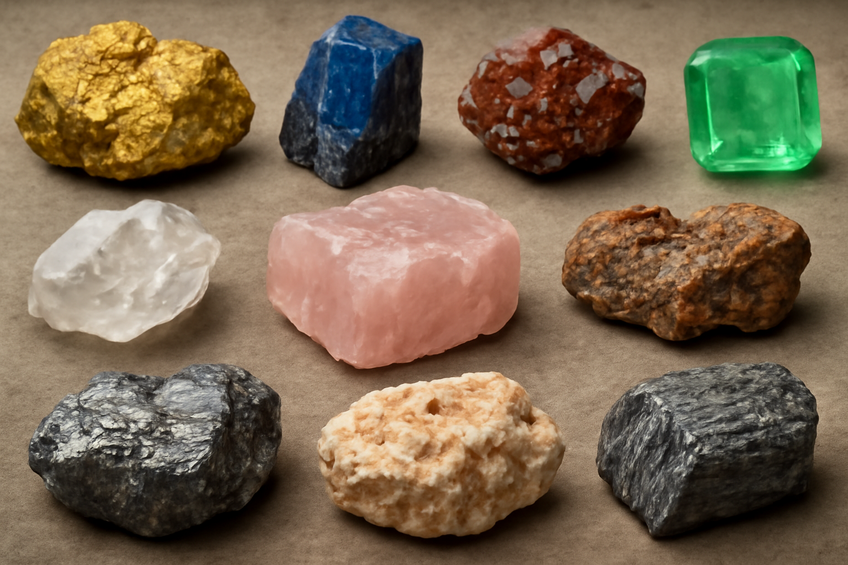
From the depths of the earth to the devices in our pockets, minerals power the modern world. Whether it’s the gold in your jewelry or the lithium in your smartphone battery, these precious resources are extracted at massive scales every single day. In this post, we explore the top 10 most valuable minerals being mined around the world right now, why they matter, and where they come from.
1. Gold (Au)
Gold remains one of the most sought-after minerals on the planet. Mined primarily in China, Australia, Russia, and South Africa, gold is valued for its use in jewelry, electronics, and as a global financial reserve. With prices consistently hovering above $1,900 to $2,000+ per troy ounce, gold mining is a multi-billion dollar industry that shows no signs of slowing down.
Why Gold Is Still King
Gold’s chemical stability, conductivity, and cultural significance make it irreplaceable. Central banks worldwide continue to stockpile gold as a hedge against inflation, keeping demand — and prices — sky high.
2. Lithium (Li)
Often called “white gold,” lithium is the backbone of the electric vehicle revolution. It is a critical component in lithium-ion batteries used in EVs, smartphones, and renewable energy storage systems. Australia, Chile, and Argentina — known as the “Lithium Triangle” — are the top producers globally.
The EV Boom and Lithium Demand
As governments push toward carbon-neutral transportation, lithium demand is expected to increase by over 500% by 2050. This makes it one of the most strategically important minerals being mined today.
Advertisement
3. Diamonds
Diamonds are not just a symbol of luxury — they are also essential industrial tools. Used in cutting, drilling, and polishing equipment, diamonds hold immense commercial value. Russia, Botswana, Canada, and the Democratic Republic of Congo are among the leading producers.
Industrial vs. Gemstone Diamonds
While gemstone diamonds dominate headlines, nearly 80% of all mined diamonds are used for industrial purposes. Lab-grown diamonds are emerging as competitors, but naturally mined diamonds still command premium prices in global markets.
4. Cobalt (Co)
Cobalt is a critical mineral used in rechargeable batteries, superalloys, and magnetic materials. The Democratic Republic of Congo (DRC) produces over 70% of the world’s cobalt supply, making it a geopolitical hotspot for mineral resources.
Cobalt’s Role in Clean Energy
Battery manufacturers are racing to secure cobalt supplies as electric vehicle production surges. Despite ethical concerns over mining practices in the DRC, cobalt remains one of the most economically important minerals on earth.
5. Copper (Cu)
Copper is the lifeblood of electrical infrastructure. From power grids to plumbing to computer chips, copper is everywhere. Chile, Peru, China, and the Democratic Republic of Congo are the world’s largest copper producers.
Advertisement
Copper and the Green Energy Transition
Renewable energy systems require significantly more copper than traditional power sources. Solar panels, wind turbines, and electric vehicles all rely heavily on copper wiring, making it one of the most in-demand minerals of the 21st century.
6. Platinum Group Metals (PGMs)
Platinum, palladium, rhodium, and other platinum group metals are among the rarest and most valuable minerals on Earth. They are primarily used in catalytic converters, fuel cells, and high-end electronics. South Africa and Russia dominate global production.
Rhodium: The World’s Most Expensive Metal
Rhodium, a member of the platinum group, has seen prices soar to over $20,000 per troy ounce in recent years. Its role in reducing vehicle emissions makes it incredibly valuable in today’s environmentally conscious automotive industry.
7. Rare Earth Elements (REEs)
Rare earth elements include a group of 17 metallic elements such as neodymium, dysprosium, and cerium. They are essential for manufacturing high-powered magnets, wind turbines, electric motors, and advanced defense systems. China controls approximately 60% of global rare earth production.
Strategic Importance of Rare Earths
Rare earth elements have become a focal point of geopolitical competition between the United States and China. Countries worldwide are investing in domestic REE production to reduce dependence on Chinese supply chains, driving up their global value.
Advertisement
8. Silver (Ag)
Silver is far more than a precious metal for jewelry. It is a critical component in solar panels, electronics, medical equipment, and industrial machinery. Mexico, Peru, China, and Russia are the top silver-producing nations.
Silver’s Dual Role in Industry and Investment
Silver’s unique combination of industrial utility and investment appeal makes it one of the most consistently valuable minerals. With solar energy expansion driving industrial demand, silver prices are expected to remain strong for decades to come.
9. Nickel (Ni)
Nickel is a vital ingredient in stainless steel production and, increasingly, in electric vehicle batteries. Indonesia, the Philippines, Russia, and Canada are leading producers of nickel ore worldwide.
Nickel’s Growing Role in EV Batteries
Battery manufacturers are transitioning toward nickel-rich chemistries to improve energy density and reduce reliance on cobalt. This shift has triggered a global surge in nickel demand, cementing its status as one of the most valuable minerals of the EV era.
10. Uranium (U)
Uranium powers the world’s nuclear energy plants and is a cornerstone of global electricity generation. Kazakhstan, Canada, Australia, and Namibia are the largest uranium-producing countries. With a renewed global interest in nuclear power as a clean energy source, uranium mining is experiencing a significant revival.
Advertisement
The Nuclear Energy Renaissance
As the world grapples with climate change and energy security concerns, nuclear power is back on the agenda. Countries across Europe, Asia, and North America are investing in new nuclear reactors, driving fresh demand for uranium and pushing its value higher on global commodity markets.
Why Valuable Minerals Matter More Than Ever
The minerals listed above are not just commodities — they are the building blocks of modern civilization. From smartphones to satellites, clean energy to construction, these resources underpin virtually every industry on earth. As technology advances and the clean energy transition accelerates, the demand for these minerals will only continue to grow.
Understanding where these minerals come from, how they are mined, and why they are so valuable gives us a clearer picture of the global economy and geopolitical landscape. Nations that control these resources wield significant power in international affairs, making mineral mining a topic of critical importance for governments, investors, and everyday consumers alike.
Final Thoughts
The race to secure the world’s most valuable minerals is intensifying as technology and sustainability demands reshape global priorities. Whether you are an investor tracking commodity markets, a tech enthusiast following EV trends, or simply curious about what lies beneath the earth’s surface, these top 10 most valuable minerals represent the pulse of the modern global economy.
Stay informed about mineral markets, because the ground beneath our feet holds the key to the future of energy, technology, and human progress.
Advertisement


