





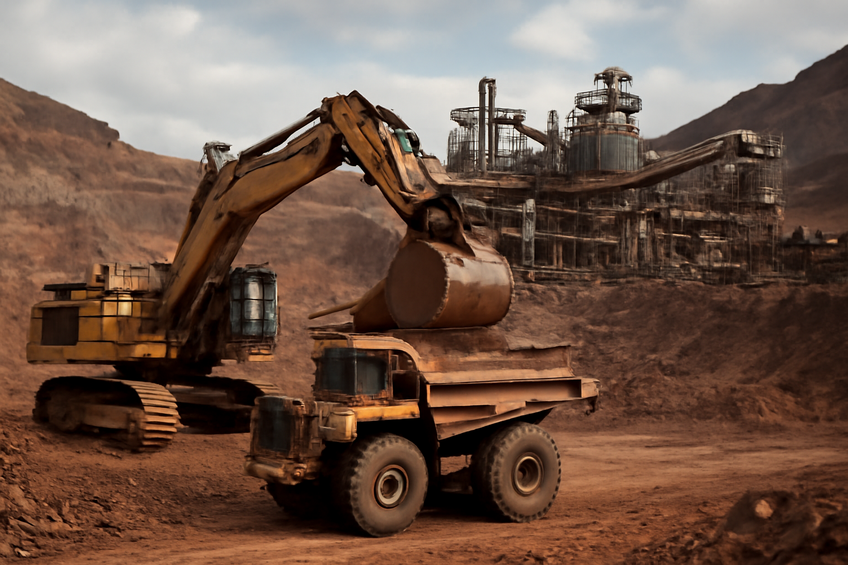
Idle Deposits Back in Play as Copper Supply Tightens
Copper demand is accelerating across multiple end-use sectors simultaneously, creating a supply-side pressure that is pushing mining companies to reconsider assets they once deemed uneconomical or operationally inconvenient. Projects that were placed on care-and-maintenance status during periods of low prices or corporate restructuring are now attracting renewed technical and financial scrutiny as the industry grapples with a structural supply gap.
The dynamic reflects a broader shift in copper market fundamentals. Declining ore grades at major producing mines, a thinning pipeline of large-scale greenfield discoveries, and lengthening permitting timelines in key jurisdictions have collectively reduced the industry’s ability to bring new supply online at the pace demand now requires.
What Is Driving Copper Demand Higher
The electrification of transport, expansion of grid infrastructure, and the buildout of renewable energy generation are the primary engines behind rising copper consumption. Electric vehicles use significantly more copper than internal combustion engine vehicles, and utility-scale solar and wind installations require substantial quantities of copper wiring, transformers, and cabling.
Data center construction — driven by artificial intelligence workloads and cloud infrastructure investment — has emerged as an additional demand vector that was less prominent in earlier copper market forecasts. These facilities are power-intensive and copper-heavy in their electrical systems, adding a layer of demand that analysts are still revising upward.
Emerging market urbanization continues to underpin baseline copper consumption as well. Construction activity, grid electrification in developing economies, and industrial expansion in regions across Southeast Asia, South Asia, and Africa sustain a demand floor that exists independently of the energy transition narrative.
Why Mothballed Projects Are Back Under the Microscope
Reactivating a suspended project is rarely straightforward, but the calculus has shifted meaningfully. Higher sustained copper prices improve the economic viability of deposits with lower grades or higher strip ratios that were marginal during previous market cycles. Engineering teams that once shelved feasibility studies are being asked to dust them off and reassess against current cost structures and metal price assumptions.
Operational and Financial Considerations
Bringing a mothballed operation back into production typically requires less time than advancing a greenfield project through exploration, permitting, and construction. Existing infrastructure — process plants, tailings facilities, access roads, and power connections — can often be rehabilitated at a fraction of the cost of building from scratch. This compressed timeline is particularly attractive to companies under pressure to demonstrate production growth.
Financing conditions for copper projects have also improved relative to several years ago. Lenders and streaming companies have grown more comfortable underwriting copper assets given the metal’s role in energy transition supply chains. Offtake interest from manufacturers, utilities, and technology companies seeking to secure long-term supply has added another layer of financial support for project restarts.
Key Challenges That Still Apply
Despite improved economics, reactivating suspended mines is not without risk. Common obstacles include:
- Regulatory re-engagement: Environmental permits may have lapsed or require updating to meet current standards, triggering new assessment processes.
- Infrastructure degradation: Equipment and facilities left idle for extended periods often require more extensive rehabilitation than initial estimates suggest.
- Community relations: Local opposition that contributed to an original suspension may not have dissipated, and social licence must be rebuilt before operations can resume.
- Labour availability: Skilled mining workforces do not remain intact during long shutdowns, requiring recruitment and retraining investment.
- Updated resource estimates: Geological models may need reinterpretation using modern techniques, and previously uneconomic zones may need to be reclassified.
Geographic Hotspots for Restarts
The Americas remain the most active region for copper project reactivation, given the concentration of known copper endowment in Chile, Peru, the southwestern United States, and increasingly Ecuador and Argentina. Many deposits in these jurisdictions were advanced to prefeasibility or feasibility stage before being shelved, meaning technical work already completed retains significant value.
Africa’s copper belt, spanning the Democratic Republic of Congo and Zambia, also hosts suspended or underperforming assets that are receiving renewed attention. Improving infrastructure in parts of the region and a more competitive fiscal environment in some host countries have made previously marginal projects worth revisiting.
Australia and parts of southern Europe hold smaller-scale copper deposits where restart economics can work given proximity to existing processing infrastructure and relatively stable regulatory environments. These assets may not move the global supply needle dramatically, but they contribute to regional supply security and can be developed with modest capital outlays.
Strategic Implications for the Broader Industry
The revival of mothballed copper assets signals something important about the state of the industry: the easy supply response options have largely been exhausted. When miners are turning to suspended projects as a meaningful part of their growth strategy, it underscores how constrained the new-discovery pipeline has become. Majors and mid-tier producers alike are reassessing asset portfolios, and junior companies with care-and-maintenance copper assets are finding themselves in a more favourable negotiating position with potential partners and acquirers.
As the gap between copper demand growth and available supply continues to widen, the pace of project reactivation is likely to accelerate. Companies that can navigate permitting, community engagement, and rehabilitation efficiently will be best positioned to capture the value on offer — and to contribute meaningful tonnes to a market that needs them sooner rather than later.


