




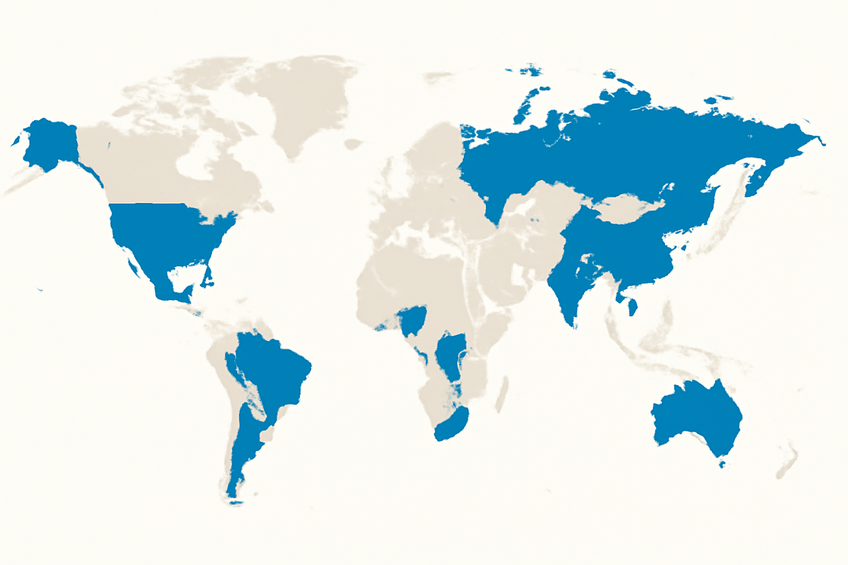
The global demand for minerals is skyrocketing, driven by the green energy transition, electric vehicles, and advanced technology manufacturing. While some nations have already heavily exploited their natural resources, others are sitting on vast untapped mineral wealth that could reshape the global economy. In this post, we explore the top 10 countries with the largest untapped mineral reserves in 2025, offering a comprehensive look at where the world’s next great resource boom could occur.
Why Untapped Mineral Reserves Matter in 2025
As the world accelerates toward renewable energy and technological advancement, the need for critical minerals such as lithium, cobalt, rare earth elements, copper, and nickel has never been greater. Countries holding untapped reserves are increasingly seen as strategic powerhouses, attracting foreign investment, geopolitical attention, and economic development opportunities. Understanding where these reserves lie is crucial for investors, governments, and industry leaders alike.
Top 10 Countries With the Largest Untapped Mineral Reserves
1. Democratic Republic of Congo (DRC)
The Democratic Republic of Congo tops the list with an estimated $24 trillion worth of untapped mineral reserves. The country holds some of the world’s largest deposits of cobalt, coltan, diamonds, gold, and copper. Despite ongoing political instability, the DRC remains one of the most mineral-rich nations on Earth. Its cobalt reserves alone are critical for electric vehicle battery production, making it a focal point for global tech and energy companies in 2025.
2. Russia
Russia possesses an extraordinary wealth of untapped natural resources, including vast deposits of rare earth elements, platinum, palladium, nickel, coal, and natural gas. Much of Russia’s mineral wealth lies in remote regions of Siberia and the Arctic, where harsh climates and underdeveloped infrastructure have slowed extraction. However, with advancing technologies and growing global demand, Russia’s untapped reserves represent an enormous future economic potential.
3. United States
The United States holds significant untapped mineral reserves, particularly in states like Alaska, Nevada, and Wyoming. Key resources include lithium, copper, rare earth elements, uranium, and gold. The U.S. government has been actively working to reduce dependency on foreign minerals by investing in domestic mining operations. With new discoveries and modern extraction technologies, America’s untapped reserves are gaining increased attention in 2025.
Advertisement
4. China
China is already the world’s largest producer of rare earth elements, but it still holds massive untapped reserves of rare earths, tungsten, molybdenum, and lithium. The Chinese government strategically controls much of its mineral output, keeping significant reserves untouched as a geopolitical and economic leverage tool. As global competition for critical minerals intensifies, China’s untapped resources remain a dominant factor in international resource politics.
5. Australia
Australia is a global mining powerhouse, yet a significant portion of its mineral wealth remains untapped. The country boasts world-class deposits of lithium, iron ore, gold, nickel, copper, and rare earth elements. Australia’s stable political environment, strong regulatory framework, and advanced mining infrastructure make it one of the most attractive destinations for mineral investment in 2025. Remote regions such as the Pilbara and Western Australia continue to reveal new resource discoveries.
6. Brazil
Brazil is home to some of the world’s largest untapped reserves of iron ore, bauxite, lithium, niobium, and rare earth minerals. The Amazon basin and the Minas Gerais region are particularly rich in mineral wealth. Brazil holds approximately 98% of the world’s known niobium reserves, a critical mineral used in the production of high-strength steel and superconductors. Sustainable mining development remains a key challenge as the country balances resource extraction with environmental protection.
7. Canada
Canada’s vast and largely unexplored territories harbor enormous quantities of lithium, cobalt, nickel, uranium, gold, and rare earth elements. The country’s remote northern regions, including the Northwest Territories and Nunavut, contain mineral deposits that have barely been touched. Canada’s strong mining industry, transparent governance, and proximity to the United States make it a top destination for critical mineral investment in 2025.
8. Kazakhstan
Kazakhstan is one of the world’s most underrated mineral powerhouses. The country holds substantial untapped reserves of uranium, chromium, lead, zinc, copper, and rare earth elements. Kazakhstan is already the world’s largest producer of uranium, but vast portions of its mineral wealth remain unexplored. With ongoing investment in mining infrastructure and favorable government policies, Kazakhstan is emerging as a critical player in the global minerals market.
Advertisement
9. Greenland
Greenland has emerged as one of the most exciting frontiers for untapped mineral exploration in the world. As Arctic ice continues to recede, previously inaccessible deposits of rare earth elements, uranium, zinc, iron ore, and oil are becoming reachable. Greenland holds some of the largest known rare earth deposits outside of China, making it a strategically vital territory. Both the United States and European nations have expressed strong interest in partnering with Greenland for mineral development in 2025.
10. Mongolia
Mongolia is endowed with vast untapped reserves of coal, copper, gold, uranium, and rare earth elements. The Oyu Tolgoi copper and gold mine is one of the largest in the world, yet much of the country’s mineral landscape remains underexplored. Mongolia’s geographic position between Russia and China presents both opportunities and challenges. With growing foreign investment and infrastructure development, Mongolia is steadily unlocking its massive mineral potential.
Key Minerals Driving Global Demand in 2025
Understanding which minerals are most sought after helps explain why these countries are drawing global attention. The following critical minerals are at the forefront of the 2025 resource boom:
- Lithium: Essential for electric vehicle batteries and energy storage systems.
- Cobalt: A key component in rechargeable batteries and aerospace alloys.
- Rare Earth Elements: Used in electronics, wind turbines, and military technologies.
- Copper: Critical for electrical wiring, renewable energy infrastructure, and EVs.
- Nickel: Vital for stainless steel production and battery technology.
- Uranium: A primary fuel source for nuclear energy, gaining renewed interest globally.
Challenges Facing Untapped Mineral Development
While these countries hold extraordinary mineral wealth, several significant challenges must be overcome before these resources can be fully utilized.
Infrastructure and Accessibility
Many of the world’s largest untapped mineral deposits are located in remote, difficult-to-access regions. Building the roads, ports, railways, and energy infrastructure needed to support mining operations requires enormous capital investment and time.
Advertisement
Environmental and Social Concerns
Large-scale mining operations can have devastating impacts on local ecosystems and indigenous communities. Countries and companies are under increasing pressure to adopt sustainable and responsible mining practices that minimize environmental damage and respect the rights of local populations.
Geopolitical Risks
Political instability, corruption, and territorial disputes can make mineral-rich regions highly risky for investors. Countries like the DRC and Mongolia face governance challenges that complicate the development of their mineral sectors.
Technological Barriers
Extracting minerals from deep underground, beneath Arctic ice, or in ecologically sensitive areas requires cutting-edge technology. Investment in advanced mining technologies, including automation and AI-driven exploration, is essential to unlocking the full potential of these reserves.
The Geopolitical Race for Critical Minerals in 2025
The competition for critical minerals has become one of the defining geopolitical battles of the 21st century. The United States, China, and the European Union are all aggressively pursuing mineral supply chain security through bilateral agreements, foreign aid, and direct investment in mineral-rich nations. In 2025, this global mineral race is more intense than ever, with nations recognizing that control over critical mineral supplies translates directly into technological and economic power.
Western nations are particularly focused on reducing their dependence on Chinese-controlled rare earth supply chains, leading to increased investment in countries like Australia, Canada, Greenland, and select African nations. Meanwhile, China continues to expand its mineral footprint across Africa, Latin America, and Central Asia.
Advertisement
Investment Opportunities in Untapped Mineral Markets
For investors, the untapped mineral sector represents one of the most compelling opportunities of the decade. Key strategies include:
- Investing in junior mining companies exploring high-potential regions.
- Purchasing stocks in established mining corporations with diversified global operations.
- Exploring mineral royalty and streaming companies for lower-risk exposure.
- Monitoring government-backed mineral development programs in emerging markets.
As the energy transition accelerates and technology demands grow, the value of critical mineral reserves is expected to increase significantly throughout the remainder of the 2020s.
Conclusion
The countries with the largest untapped mineral reserves in 2025 are positioned to play a pivotal role in shaping the future of the global economy. From the cobalt-rich jungles of the Democratic Republic of Congo to the rare earth-laden ice of Greenland, these nations hold the raw materials that will power the next generation of technology and clean energy. However, unlocking this potential requires overcoming significant infrastructure, environmental, and geopolitical challenges. As the world’s appetite for critical minerals continues to grow, these resource-rich nations will increasingly find themselves at the center of global economic and political attention.
Advertisement


