





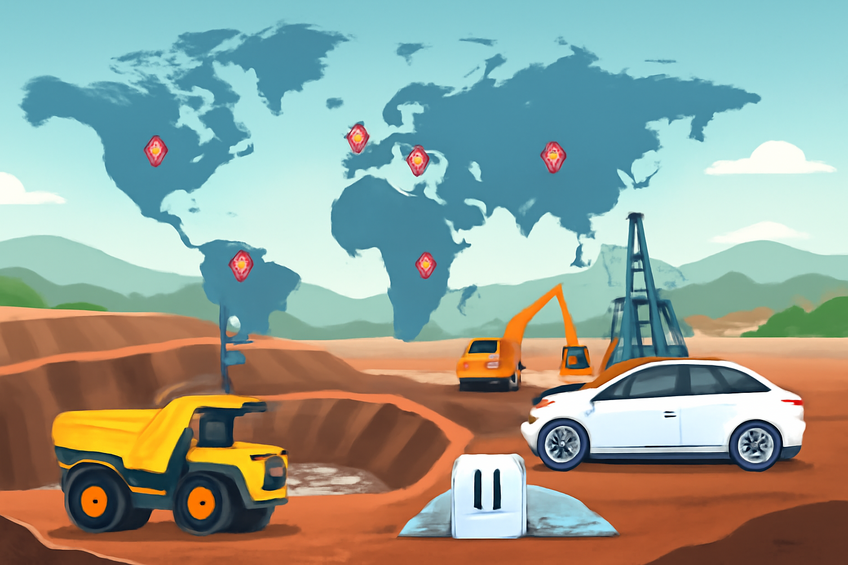
The global shift toward electric vehicles (EVs) is accelerating at an unprecedented pace, and at the heart of this revolution lies one critical element — lithium. Known as “white gold,” lithium is the essential ingredient in EV batteries, and the countries that mine it are shaping the future of clean transportation. In 2025, understanding which nations lead lithium production is crucial for investors, policymakers, and EV enthusiasts alike. Here is a comprehensive look at the top 10 lithium mining countries driving the global electric vehicle revolution.
Why Lithium Is Critical to the EV Revolution
Lithium-ion batteries power everything from smartphones to electric cars and grid-scale energy storage systems. As EV adoption surges globally, the demand for lithium has skyrocketed. According to the International Energy Agency (IEA), lithium demand is expected to grow by more than 40 times by 2040 compared to 2020 levels. Countries that control significant lithium reserves are now considered strategic powerhouses in the global energy transition.
Top 10 Lithium Mining Countries in 2025
1. Australia — The World’s Largest Lithium Producer
Australia continues to reign as the world’s top lithium-producing nation in 2025, accounting for nearly 50% of global lithium output. The Pilbara region in Western Australia is home to some of the largest and richest spodumene deposits on Earth. Major projects like Pilbara Minerals’ Pilgangoora and Greenbushes mine operated by Talison Lithium make Australia the undisputed leader. With heavy investment in downstream processing, Australia is not just mining lithium — it is working to refine and export battery-grade lithium chemicals as well.
2. Chile — Sitting on the Lithium Triangle
Chile holds the world’s largest lithium reserves, primarily concentrated in the Atacama Desert’s vast salt flats. The country produces lithium brine through evaporation ponds, with SQM and Albemarle being the dominant players. Chile’s government has pushed for greater state involvement in the sector, with the national lithium strategy aiming to maximize economic benefits for Chilean citizens. The country remains a top supplier of lithium carbonate and lithium hydroxide to global battery manufacturers.
3. China — The Processing Powerhouse
While China may not have the largest raw lithium reserves, it is the world’s largest lithium processor and refiner. China controls more than 60% of global lithium processing capacity, making it a dominant force in the EV supply chain. Domestic mining operations in regions like Sichuan, Qinghai, and Tibet are supplemented by massive imports from Australia and Chile. Chinese companies such as Ganfeng Lithium and Tianqi Lithium are global leaders in lithium production and battery supply chains.
Advertisement
4. Argentina — Rising Star of the Lithium Triangle
Argentina is rapidly establishing itself as a key lithium producer in South America. Part of the coveted Lithium Triangle shared with Chile and Bolivia, Argentina’s salt flats in Jujuy, Salta, and Catamarca provinces hold enormous lithium brine deposits. In 2025, several major projects have moved into commercial production, with investments pouring in from global mining giants. Argentina’s more open regulatory environment compared to its neighbors has attracted significant foreign direct investment.
5. Bolivia — Untapped Giant with Massive Potential
Bolivia sits on the Salar de Uyuni, the world’s largest salt flat and potentially the largest single lithium deposit globally. Despite holding enormous reserves, Bolivia has historically struggled to translate its lithium wealth into production due to nationalization policies and infrastructure challenges. However, in 2025, Bolivia is making progress through partnerships with Chinese and European firms to develop its lithium industry, signaling a potential surge in output in the coming decade.
6. United States — Strengthening Domestic Supply Chains
With the Inflation Reduction Act (IRA) incentivizing domestic battery material production, the United States is investing heavily in its lithium mining sector. Nevada’s Thacker Pass, operated by Lithium Americas, is one of the most significant lithium projects in North America. The US government has designated lithium as a critical mineral, accelerating permitting and funding for new projects. By reducing reliance on foreign lithium, the US is working to secure its EV supply chain from geopolitical risks.
7. Canada — An Emerging Lithium Leader
Canada has emerged as a promising lithium mining destination, with rich deposits across Quebec, Ontario, and the Northwest Territories. The country’s political stability, strong mining regulations, and trade relationships with the US make it an attractive option for lithium investment. Projects like the Separation Rapids in Ontario and Rose Lithium-Tantalum in Quebec are advancing steadily. Canada’s close alignment with US critical mineral strategies gives it a strategic advantage in the North American EV supply chain.
8. Brazil — Significant Hard Rock Lithium Resources
Brazil is home to significant spodumene and lepidolite lithium deposits, particularly in the state of Minas Gerais. The country has historically been a modest lithium producer but is now actively expanding its mining operations to capitalize on global demand. Brazilian mining company Sigma Lithium has brought its Grota do Cirilo project into production, positioning Brazil as a growing supplier of battery-grade lithium. The government has also introduced policies to encourage downstream lithium processing within the country.
Advertisement
9. Portugal — Europe’s Leading Lithium Producer
Portugal holds the largest lithium reserves in Europe and is working to become the continent’s primary domestic lithium source. The Barroso Lithium Project in northern Portugal is one of Europe’s most significant lithium mining initiatives. As the European Union races to reduce its dependence on non-European lithium sources, Portugal’s deposits are gaining strategic importance. Portugal’s lithium could play a critical role in supplying European gigafactories being built by Tesla, Volkswagen, and others.
10. Zimbabwe — Africa’s Lithium Rising Power
Zimbabwe has rapidly climbed the ranks of global lithium producers, with its Bikita and Arcadia lithium mines attracting major international investment, particularly from Chinese companies. In 2025, Zimbabwe has implemented lithium ore export restrictions to encourage local processing and value addition. The country’s government views lithium as a cornerstone of its economic development strategy. Zimbabwe’s entry into the top lithium-producing nations signals Africa’s growing importance in the global battery supply chain.
The Lithium Triangle: South America’s Strategic Dominance
The so-called Lithium Triangle — encompassing Chile, Argentina, and Bolivia — contains more than 50% of the world’s known lithium reserves. This region’s brine-based deposits are particularly significant because lithium extracted from brines typically has a lower production cost compared to hard rock spodumene mining. As EV adoption accelerates, geopolitical attention on this South American powerhouse is intensifying, with China, the US, and European nations all vying for access to these critical resources.
Environmental Challenges Facing the Lithium Mining Industry
While lithium is essential for the green energy transition, its extraction is not without controversy. Key environmental concerns include:
- Water Usage: Lithium brine extraction in arid regions like the Atacama Desert consumes enormous quantities of water, threatening local ecosystems and indigenous communities.
- Land Degradation: Open-pit hard rock mining leads to significant land disturbance and habitat destruction.
- Carbon Footprint: Mining and refining lithium requires significant energy, though efforts are being made to power operations with renewable energy.
- Community Impact: Mining operations often intersect with indigenous lands, raising human rights and social justice concerns.
The industry is responding with innovations in direct lithium extraction (DLE) technology, which promises to dramatically reduce water usage and environmental impact while increasing recovery rates.
Advertisement
The Role of Recycling in Reducing Lithium Mining Demand
Battery recycling is emerging as a critical component of the sustainable lithium supply chain. As millions of EV batteries reach end-of-life over the coming decade, lithium recycling could offset a significant portion of future mining demand. Companies like Redwood Materials, Li-Cycle, and Umicore are building large-scale battery recycling facilities that can recover lithium, cobalt, nickel, and manganese for reuse in new batteries. Governments in the EU, US, and China are introducing regulations to mandate battery recycling rates, further boosting this emerging industry.
Geopolitical Implications of the Global Lithium Race
Control over lithium resources has become a major geopolitical issue in 2025. China’s dominance in lithium processing has prompted the United States, European Union, Australia, Canada, and Japan to form strategic alliances and invest in alternative supply chains. The US-Australia Critical Minerals Partnership and the EU’s Critical Raw Materials Act are examples of how governments are working to diversify and secure their lithium supply chains against potential disruptions. This new “lithium geopolitics” is reshaping international trade relationships and national security strategies.
Future Outlook: Lithium Demand Through 2030 and Beyond
The outlook for lithium demand remains extraordinarily bullish. Analysts project that global lithium demand will continue to grow at a compound annual growth rate (CAGR) of 20-25% through 2030, driven by:
- Explosive growth in EV sales across China, Europe, and North America
- Rapid expansion of grid-scale energy storage systems
- Growing adoption of lithium batteries in consumer electronics and industrial applications
- Development of next-generation solid-state batteries with higher lithium content
New lithium discoveries in unconventional sources, including geothermal brines, oil field wastewater, and seawater, could also reshape the supply landscape in the coming years, potentially reducing geographic concentration risks.
Investment Opportunities in the Lithium Mining Sector
For investors looking to capitalize on the lithium boom, the lithium mining sector offers significant opportunities. Key investment avenues include:
Advertisement
- Pure-play lithium miners such as Pilbara Minerals, Lithium Americas, and Sigma Lithium
- Diversified mining majors with lithium exposure like Albemarle, SQM, and Rio Tinto
- Lithium-focused ETFs that provide diversified exposure to the entire supply chain
- Battery material companies involved in refining and processing lithium chemicals
As with any commodity investment, lithium prices are subject to volatility driven by supply-demand imbalances, technological changes, and macroeconomic factors. Thorough due diligence and a long-term investment horizon are advisable for those entering this space.
Conclusion: Lithium Mining Nations at the Center of the Energy Transition
The top 10 lithium mining countries of 2025 — Australia, Chile, China, Argentina, Bolivia, the United States, Canada, Brazil, Portugal, and Zimbabwe — are not just mining a metal. They are shaping the future of global transportation, energy storage, and climate change mitigation. As the electric vehicle revolution accelerates, the strategic importance of lithium will only grow, making these nations central players in the 21st-century global economy.
Understanding the dynamics of global lithium production is essential for anyone involved in the EV industry, energy sector, or sustainable investing. The countries that manage their lithium resources wisely — balancing economic development, environmental protection, and geopolitical strategy — will be best positioned to lead in the clean energy era ahead.
Advertisement


