




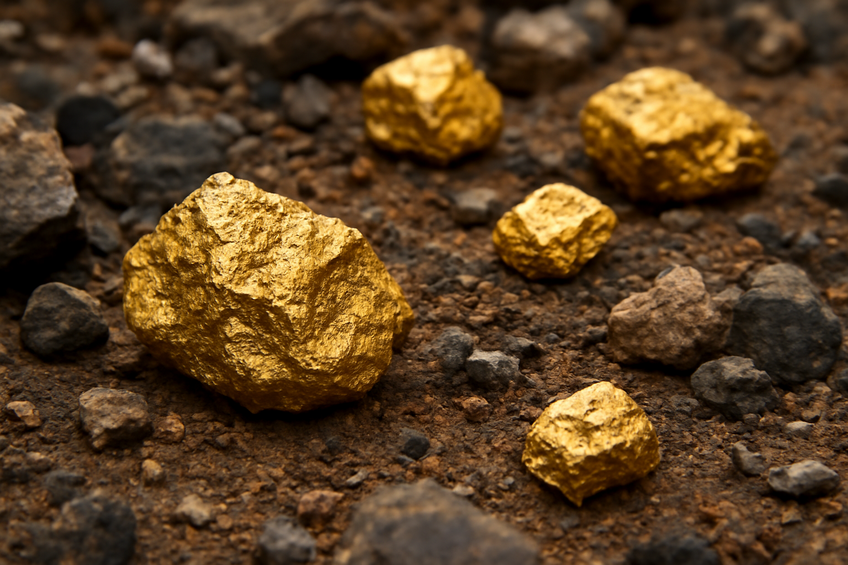
The 21st century has witnessed some of the most remarkable gold discoveries in human history. These massive finds have not only reshaped the global mining industry but have also influenced economies, geopolitics, and investment markets worldwide. From remote deserts to dense rainforests, prospectors and mining companies have uncovered deposits that have fundamentally altered our understanding of where gold can be found and how much of it still remains beneath the Earth’s surface.
Why Gold Discoveries Still Matter in the Modern World
Despite centuries of mining, gold continues to surprise us. The demand for gold in jewelry, electronics, and as a financial safe-haven asset keeps the hunt alive. Each major discovery sends ripples through global markets, attracts billions in investment, and creates thousands of jobs in some of the world’s most remote regions. Understanding these landmark finds helps investors, geologists, and history enthusiasts appreciate just how dynamic the gold mining industry remains today.
The 10 Biggest Gold Discoveries of the 21st Century
1. South Deep Mine Expansion – South Africa (2000s)
The South Deep Gold Mine in South Africa’s Witwatersrand Basin was already known as one of the world’s largest gold deposits, but renewed exploration and expanded development in the early 21st century revealed the true scale of its reserves. With an estimated resource of over 930 tonnes of gold, South Deep stands as the second largest gold mine in the world by reserve size. Gold Fields took ownership in 2006 and invested heavily in modernizing operations, making this one of the most significant gold stories of the modern era.
2. Grasberg Mine New Zones – Papua, Indonesia (2000s–2010s)
The Grasberg mine in Papua, Indonesia, managed by Freeport-McMoRan, continuously revealed new ore zones throughout the 21st century. These discoveries pushed Grasberg into the ranks of the world’s largest gold and copper deposits. The underground expansion following the open-pit phase uncovered massive new reserves estimated at billions of dollars in combined metal value, securing Indonesia’s position as a global mining powerhouse for decades to come.
3. Oyu Tolgoi Gold and Copper Discovery – Mongolia (2001)
While primarily famous as a copper deposit, the Oyu Tolgoi discovery in Mongolia’s South Gobi Desert in 2001 also contains substantial gold reserves. Ivanhoe Mines identified this world-class deposit, which is estimated to contain approximately 46 million ounces of gold equivalent alongside its massive copper reserves. The discovery transformed Mongolia’s economic prospects and attracted international mining giants including Rio Tinto, making it one of the most consequential mineral finds of the century.
Advertisement
4. Kibali Gold Mine Discovery – Democratic Republic of Congo (2005)
Located in the northeastern corner of the Democratic Republic of Congo, the Kibali gold deposit was identified as a world-class find in the mid-2000s. Developed jointly by Barrick Gold and AngloGold Ashanti, Kibali holds reserves exceeding 10 million ounces of gold. The mine became one of Africa’s largest gold producers, generating over 800,000 ounces annually at peak production. Despite the challenging political environment, Kibali proved that responsible mining could unlock tremendous value in frontier regions.
5. Pueblo Viejo Discovery – Dominican Republic (2006)
The Pueblo Viejo deposit in the Dominican Republic emerged as one of the Caribbean’s most significant mineral discoveries. Barrick Gold and Goldcorp jointly developed this high-grade deposit, which contains reserves of approximately 25 million ounces of gold. The mine officially began production in 2012 and has since become one of the world’s largest gold producers, fundamentally changing the Dominican Republic’s national economy and proving the Caribbean as a legitimate world-class mining destination.
6. Surda and Sonakhan Belt Discoveries – India (2000s)
India’s Geological Survey uncovered significant new gold mineralization zones across the country during the early 21st century, particularly in Chhattisgarh and other mineral-rich states. While individual deposits remain smaller compared to global giants, the cumulative potential identified across India’s greenstone belts has sparked enormous interest from domestic and international mining companies. These discoveries reinforced India’s position as an underexplored frontier for gold mining in Asia.
7. Lihir Mine Expansion – Papua New Guinea (2010)
The Lihir gold mine in Papua New Guinea, operated on a volcanic island, underwent significant resource expansion in the early 21st century when Newcrest Mining acquired it in 2010. Updated geological surveys revealed that Lihir’s reserves had grown to over 40 million ounces of gold, making it one of the largest single gold deposits on Earth. The volcanic hydrothermal system that created Lihir continues to be studied by geologists worldwide as a unique geological phenomenon that guided future exploration strategies globally.
8. Côte d’Ivoire Gold Rush – West Africa (2010s)
West Africa emerged as one of the most exciting gold frontiers of the 21st century, with Côte d’Ivoire (Ivory Coast) at the center of multiple major discoveries. Companies like Perseus Mining, Endeavour Mining, and Randgold identified world-class deposits across the Birimian Greenstone Belt. The Sissingué and Ity deposits alone contributed millions of ounces to global reserves, establishing West Africa as a critical new gold province that has fundamentally shifted the geographic center of global gold production.
Advertisement
9. Donlin Gold Project – Alaska, USA (2000s–2010s)
Located in one of Alaska’s most remote regions, the Donlin Gold project became one of North America’s most exciting undeveloped gold deposits of the 21st century. Jointly owned by NovaGold and Barrick Gold, Donlin is estimated to contain over 39 million ounces of gold in measured and indicated resources. The sheer scale of this Alaskan discovery sparked widespread debate about developing remote arctic resources and positioned North America as a key player in future gold supply for generations to come.
10. Hemi Gold Discovery – Western Australia (2020)
Perhaps the most exciting gold discovery of the 21st century came in 2020 when De Grey Mining announced the Hemi gold discovery in the Pilbara region of Western Australia. This find sent shockwaves through the global mining industry. Hemi rapidly grew to become one of Australia’s largest undeveloped gold deposits, with resources surpassing 9 million ounces and growing with each new drill result. The discovery reinvigorated exploration across Western Australia and proved that even in well-explored mining regions, world-class gold deposits can still be found hiding beneath the surface.
How These Discoveries Changed the Mining Industry
Technological Innovation Driven by Big Discoveries
Each major gold discovery of the 21st century has pushed the boundaries of mining technology. From autonomous drilling systems and AI-powered geological modeling to advanced hydrometallurgical processing techniques, these large-scale finds demanded and funded technological breakthroughs. The mining equipment sector has evolved dramatically as companies raced to efficiently and safely extract gold from increasingly complex ore bodies in remote and challenging environments.
Shifting Global Gold Production Geography
The traditional gold mining strongholds of South Africa and the United States have been joined by new powerhouses in West Africa, Central Asia, and the Pacific. The discoveries of the 21st century have democratized gold production, spreading economic benefits to developing nations and creating new mining hubs across the globe. Countries like Mongolia, the Democratic Republic of Congo, and Papua New Guinea have been transformed by these finds, attracting foreign investment and building crucial infrastructure.
Environmental Standards and Responsible Mining
The scale of 21st century gold discoveries forced the industry to confront its environmental responsibilities head-on. International scrutiny over large mining projects in sensitive ecosystems led to higher environmental standards, more rigorous impact assessments, and greater community consultation processes. Modern gold mines are fundamentally different from their 20th century predecessors in terms of water management, land rehabilitation, and carbon footprint reduction strategies.
Advertisement
Impact on Gold Prices and Investment Markets
Major gold discoveries create complex ripple effects throughout financial markets. Initial announcements can dramatically boost the share prices of exploration companies, while the long-term addition of millions of ounces to global reserves influences institutional investment strategies. The discoveries covered in this article collectively added hundreds of millions of ounces to the world’s known gold resources, providing supply security that supports the gold market’s long-term stability.
What the Future Holds for Gold Discovery
Despite the remarkable finds of the past two decades, many geologists believe the world’s best gold discoveries may still lie undiscovered. Advances in deep-earth geophysical surveying, satellite-based remote sensing, and artificial intelligence are opening up new frontiers in exploration. Underwater gold deposits, deep underground ore bodies invisible to traditional exploration methods, and untested geological terranes in frontier countries all represent the next chapter in gold discovery history.
The Role of Junior Mining Companies
Many of the most exciting 21st century gold discoveries were initially made not by industry giants but by small, nimble junior mining companies willing to take risks in challenging environments. Companies like De Grey Mining and Ivanhoe Mines built their reputations on transformative discoveries that later attracted major mining corporations as partners or acquirers. This dynamic continues to drive exploration investment and innovation throughout the global gold mining ecosystem.
Artificial Intelligence and the Next Great Gold Rush
The application of artificial intelligence and machine learning to geological data interpretation represents perhaps the most significant shift in exploration methodology since the introduction of satellite imaging. By analyzing vast datasets of geochemical, geophysical, and historical drilling information simultaneously, AI systems are identifying exploration targets that human geologists might overlook. The next generation of major gold discoveries may well be credited as much to algorithms as to the geologists wielding the drill rigs.
Conclusion: A Century Defined by Golden Discovery
The 21st century has already established itself as one of the most productive eras in the history of gold discovery. From the frozen tundra of Alaska to the tropical rainforests of the Congo, these ten landmark finds have collectively added billions of dollars in value to the global economy, created hundreds of thousands of jobs, and fundamentally reshaped how the mining industry operates. As technology continues to advance and exploration techniques become ever more sophisticated, the story of gold discovery in our century is far from over. The next great find could be announced tomorrow, reshaping markets and rewriting geological history just as dramatically as those that came before it.
Advertisement


