




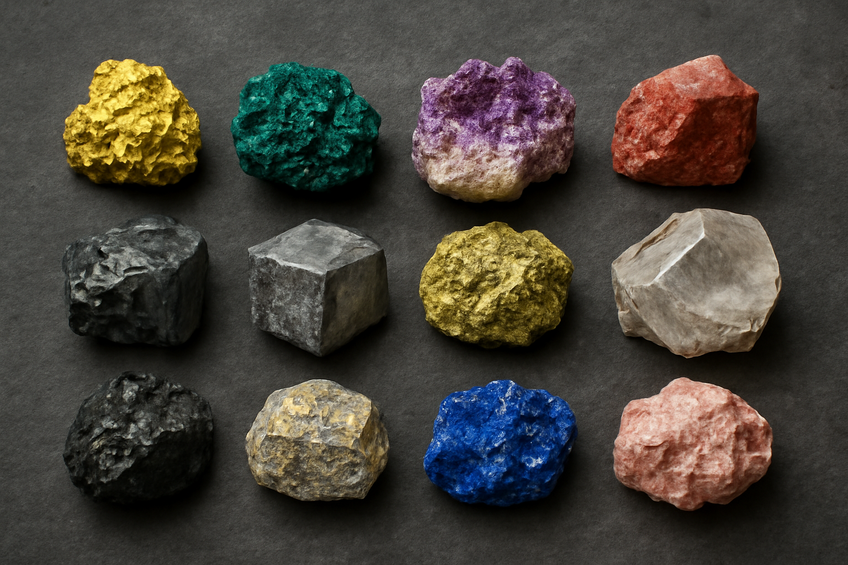
The global mining industry extracts billions of dollars worth of minerals every year, powering everything from smartphones to spacecraft. Some of these minerals are so rare, so essential, or so difficult to extract that their value has skyrocketed in recent years. Whether you’re an investor, a geology enthusiast, or simply curious about what lies beneath our feet, understanding the most valuable minerals being mined today gives you a fascinating window into the modern economy. Here is a comprehensive look at the top 10 most valuable minerals being mined around the world right now.
1. Gold – The Timeless Standard of Wealth
Gold remains one of the most sought-after and valuable minerals on Earth. Currently trading at over $2,000 per troy ounce, gold is mined on every continent except Antarctica. Major producing countries include China, Australia, Russia, and Canada.
Beyond jewelry and currency, gold plays a critical role in electronics, aerospace technology, and medical devices. Its resistance to corrosion and excellent conductivity make it irreplaceable in many high-tech applications. The global gold mining industry generates hundreds of billions of dollars annually, and demand continues to grow as investors treat it as a safe-haven asset during economic uncertainty.
Top Gold Mining Regions
The Witwatersrand Basin in South Africa, the Carlin Trend in Nevada USA, and the Super Pit in Western Australia are among the most prolific gold mining operations in the world today.
2. Platinum – Rarer Than Gold and Just as Precious
Platinum is approximately 30 times rarer than gold, making it one of the most valuable natural minerals currently being extracted. South Africa dominates global production, accounting for nearly 70% of the world’s platinum supply.
Advertisement
This silvery-white metal is essential for catalytic converters in vehicles, hydrogen fuel cells, and a wide range of industrial processes. As the world shifts toward cleaner energy technologies, platinum’s role in hydrogen production is expected to drive its value even higher in the coming decades.
3. Rhodium – The World’s Most Expensive Metal
Rhodium holds the distinction of being the most expensive metal on Earth, with prices historically reaching over $20,000 per troy ounce. It is primarily mined as a byproduct of platinum and palladium mining, mostly in South Africa and Russia.
Its primary use is in catalytic converters, where it helps convert harmful nitrogen oxides into less harmful gases. Despite its tiny mining quantities, rhodium’s critical environmental role makes it extraordinarily valuable. Its extreme rarity means even small shifts in supply or demand cause dramatic price swings.
4. Palladium – The Automotive Industry’s Essential Mineral
Palladium has seen one of the most dramatic price surges of any mineral over the past decade. Currently valued at over $1,500 per troy ounce, it is primarily mined in Russia and South Africa, with smaller operations in Canada and the United States.
Like rhodium, palladium is a key component in catalytic converters for gasoline-powered vehicles. Tightening global emission standards have dramatically increased demand for this silvery-white metal, pushing mining operations to their maximum capacity. Its use in electronics and dentistry further supports its high market value.
Advertisement
5. Lithium – The Backbone of the Green Energy Revolution
Often called white gold, lithium has transformed from a relatively obscure element into one of the most strategically important minerals on the planet. Its price has surged dramatically alongside the explosive growth of electric vehicles and renewable energy storage systems.
The majority of the world’s lithium is extracted from the Lithium Triangle in South America, spanning Chile, Argentina, and Bolivia. Australia also has significant hard-rock lithium mining operations. As battery technology continues to evolve, lithium demand is projected to increase by more than 400% by 2050, making it one of the most critical minerals being mined today.
Why Lithium Is So Important
Every electric vehicle battery requires significant amounts of lithium. Beyond EVs, lithium-ion batteries power laptops, smartphones, and grid-scale energy storage systems, cementing its status as a cornerstone mineral of the 21st century economy.
6. Cobalt – The Unsung Hero of Battery Technology
Cobalt is another mineral that has risen to global prominence due to the EV revolution. Over 70% of the world’s cobalt is mined in the Democratic Republic of Congo, making it one of the most geopolitically sensitive minerals on this list.
Cobalt is a critical component in lithium-ion battery cathodes, and it is also used in superalloys for jet engines and other high-performance applications. Its concentrated supply chain and growing demand have made it a target for significant investment and geopolitical maneuvering among major world powers.
Advertisement
7. Rare Earth Elements – The Minerals Powering Modern Technology
Rare earth elements, or REEs, are a group of 17 metallic elements that are essential to virtually every piece of modern technology. These include neodymium, dysprosium, terbium, and lanthanum, among others. China currently controls approximately 60% of global rare earth production.
These elements are critical for manufacturing permanent magnets used in electric motors, wind turbines, and military equipment. The smartphones in your pocket contain multiple rare earth elements. As global tensions over technology supply chains intensify, rare earth mining has become a matter of national security for many countries.
Where Are Rare Earth Elements Mined?
Beyond China, significant rare earth mining operations exist in Australia, the United States at the Mountain Pass mine in California, and Myanmar. Several countries are now investing heavily in developing domestic rare earth supply chains to reduce dependence on Chinese exports.
8. Diamonds – Beyond Beauty and Into Industry
Diamonds are not just the world’s most famous gemstone. They are also the hardest natural material known to science, making them invaluable in industrial cutting, drilling, and grinding applications. Russia, Botswana, Canada, and Australia are the leading diamond-producing nations.
Gem-quality diamonds can fetch tens of thousands of dollars per carat, while industrial diamonds power the construction and manufacturing sectors. The Diavik Diamond Mine in Canada and the Jwaneng Mine in Botswana are among the most productive diamond mining operations currently in operation worldwide.
Advertisement
9. Copper – The Conductor That Powers Civilization
Copper may not carry the glamour of gold or platinum, but it is arguably the most economically important mineral being mined today. With prices regularly exceeding $4 per pound, global copper production is worth hundreds of billions of dollars annually.
Chile and Peru dominate global copper production. Copper’s unmatched electrical conductivity makes it essential for electrical wiring, plumbing, renewable energy infrastructure, and electric vehicles. A single electric vehicle contains up to four times more copper than a conventional gasoline-powered car, meaning the green energy transition is expected to significantly increase copper demand for decades to come.
10. Uranium – The Fuel of the Nuclear Age
Uranium is one of the most energy-dense substances on Earth. A single uranium fuel pellet the size of a fingertip contains as much energy as 17,000 cubic feet of natural gas. Kazakhstan, Canada, and Australia are the world’s largest uranium producers.
As the world seeks low-carbon alternatives to fossil fuels, nuclear energy is experiencing a significant renaissance. This renewed interest in nuclear power has pushed uranium prices higher, attracting new investment in mining operations globally. Uranium’s strategic importance is recognized by every major world power, ensuring that mining activity will continue to grow in response to rising energy demands.
The Future of Valuable Mineral Mining
The minerals on this list share one common thread: they are all essential to the world as we know it, and demand for most of them is only expected to grow. The green energy transition, the expansion of digital technology, and the rise of electric mobility are all driving unprecedented demand for these valuable resources.
Advertisement
At the same time, mining these minerals comes with significant environmental and ethical challenges. The industry is under increasing pressure to adopt more sustainable practices, reduce carbon emissions from mining operations, and ensure that extraction activities do not harm local communities or ecosystems.
Understanding which minerals are most valuable and why they matter gives investors, policymakers, and everyday citizens a clearer picture of the forces shaping our global economy. From the gold buried in ancient riverbeds to the lithium locked in South American salt flats, these remarkable minerals are quite literally the building blocks of our modern world.
Final Thoughts
Whether measured by price per ounce, strategic importance, or technological necessity, the most valuable minerals being mined around the world represent the intersection of geology, economics, and human ingenuity. Keeping a close eye on these resources is essential for anyone seeking to understand the trajectory of the global economy in the 21st century.
Advertisement


