





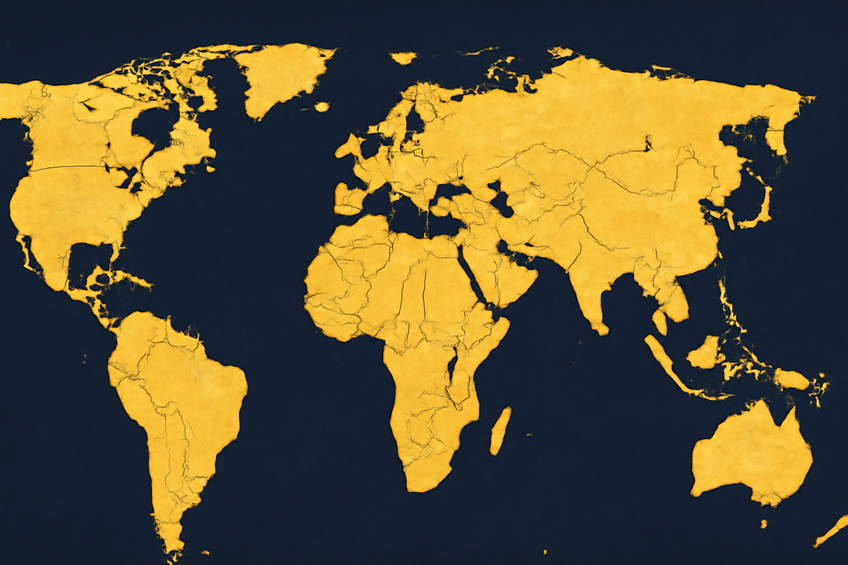
Gold has long been one of the most sought-after precious metals on Earth, driving economies, fueling exploration, and shaping global financial markets. As we move through 2025, certain nations continue to dominate the gold mining landscape, extracting millions of ounces annually and influencing gold prices worldwide. Whether you’re an investor, a mining enthusiast, or simply curious about where the world’s gold comes from, this comprehensive guide breaks down the top 10 gold mining countries dominating global production in 2025.
Why Gold Mining Still Matters in 2025
Despite the rise of digital assets and evolving financial instruments, gold remains a cornerstone of global wealth. Central banks continue to increase gold reserves, industries rely on it for electronics and medical devices, and investors turn to it as a safe-haven asset during economic uncertainty. Global gold mining production directly impacts supply chains, currency valuations, and commodity markets across the world.
According to the World Gold Council, global gold mine production remains in the range of 3,500 to 3,800 metric tons annually, with a handful of countries responsible for the overwhelming majority of that output. Let’s explore which countries are leading the charge in 2025.
Top 10 Gold Mining Countries in 2025
1. China – The World’s Largest Gold Producer
China has held the title of the world’s largest gold producer for over a decade, and 2025 is no different. With production consistently exceeding 370 metric tons per year, China’s gold mining industry is backed by massive state investment, advanced mining technology, and vast mineral-rich regions such as Shandong, Henan, and Xinjiang provinces.
The Chinese government actively supports domestic gold mining to reduce reliance on gold imports and strengthen its national reserves. Despite environmental regulations tightening in recent years, China continues to optimize its mining operations for maximum efficiency.
2. Russia – A Powerhouse in Gold Extraction
Russia consistently ranks as the second-largest gold producer in the world, with annual output hovering around 330 metric tons. Major producing regions include Siberia, the Far East, and the Ural Mountains. Companies like Polyus Gold and Polymetal International play a significant role in Russia’s production figures.
Despite geopolitical tensions and Western sanctions affecting export channels, Russia’s domestic gold industry remains robust, with the country channeling much of its gold production into national reserves and alternative trading partnerships.
3. Australia – A Leader in High-Quality Gold Deposits
Australia is one of the world’s most significant gold mining nations, producing approximately 320 metric tons annually. Western Australia, particularly the Goldfields region, is home to some of the richest gold deposits on the planet, including the famous Super Pit at Kalgoorlie.
Australian mining companies such as Newcrest Mining and Northern Star Resources are globally recognized for their operational excellence and responsible mining practices. Australia also benefits from a well-regulated mining environment that attracts significant foreign investment.
4. Canada – North America’s Gold Giant
Canada produces around 200 metric tons of gold per year, making it one of the top gold mining nations in the Western Hemisphere. Ontario and Quebec are the leading provinces for gold production, with the Red Lake and Timmins regions historically significant for their rich gold deposits.
Canadian companies such as Barrick Gold, Agnico Eagle, and Kinross Gold are among the largest gold mining corporations in the world, operating not just in Canada but across multiple continents. Canada’s stable political climate and strong regulatory framework make it a preferred destination for mining investment.
5. United States – Gold Production Driven by Nevada
The United States produces approximately 170 to 200 metric tons of gold annually, with Nevada alone accounting for nearly 75% of domestic production. The Carlin Trend in Nevada is one of the most productive gold mining regions in the world, featuring large-scale open-pit and underground operations.
Key players in US gold mining include Nevada Gold Mines, a joint venture between Barrick Gold and Newmont Corporation. Alaska also contributes meaningfully to national gold output through operations like the Donlin Gold project, which is anticipated to increase production capacity in the coming years.
6. Ghana – Africa’s Premier Gold Producer
Ghana is Africa’s largest gold producer and ranks among the global top ten, producing over 130 metric tons per year. The country’s gold mining history stretches back centuries, and today it hosts major international mining operations alongside thriving artisanal and small-scale mining (ASM) sectors.
Companies such as Gold Fields, AngloGold Ashanti, and Newmont operate large mines in Ghana’s Ashanti, Brong-Ahafo, and Western regions. The Ghanaian government has been working to regulate the ASM sector while attracting more large-scale investment to increase overall gold output responsibly.
7. Mexico – A Rising Star in Gold Mining
Mexico has emerged as one of the most important gold mining countries in Latin America, producing approximately 120 metric tons annually. States such as Sonora, Chihuahua, and Zacatecas contain some of the continent’s most promising gold and silver deposits.
The country benefits from its rich geological diversity and proximity to major mining markets. Companies like Fresnillo PLC and First Majestic Silver operate significant gold-producing mines in Mexico. However, regulatory changes and community relations challenges remain key considerations for mining companies operating in the region.
8. Indonesia – Tapping into Vast Mineral Wealth
Indonesia is one of Southeast Asia’s leading gold producers, with annual output around 100 metric tons. The Grasberg mine in Papua, operated by Freeport-McMoRan and PT Freeport Indonesia, is one of the largest gold and copper mines in the world, making it a cornerstone of the country’s mining output.
Indonesia’s government has been pushing for greater domestic processing of raw minerals, including gold, as part of its downstream industrialization policies. This move is expected to increase the economic value derived from the country’s natural resources in the long term.
9. Peru – South America’s Gold Mining Powerhouse
Peru is one of the most mineral-rich countries in the world and a major gold producer, extracting approximately 100 metric tons per year. The Cajamarca and Madre de Dios regions are among the most active gold mining areas, with a mix of large-scale industrial mines and informal artisanal operations.
Yanacocha, a joint venture between Newmont and Buenaventura, is one of the largest gold mines in South America. Peru’s government continues to work on balancing economic development through mining with environmental protection and the rights of indigenous communities.
10. South Africa – The Historic Home of Gold Mining
South Africa was once the undisputed king of global gold production, but output has declined significantly over the decades due to aging infrastructure, deepening mines, and rising operational costs. Today, the country produces around 90 to 100 metric tons annually, yet it remains historically and symbolically central to the global gold industry.
The Witwatersrand Basin, which stretches across Gauteng and the Free State provinces, is the source of an estimated 40% of all the gold ever mined in human history. Companies like Sibanye Stillwater and Gold Fields continue to extract gold from these deep-level mines, employing advanced techniques to maintain viability.
Key Factors Driving Gold Production in 2025
Technological Advancements in Mining
Modern gold mining operations are increasingly leveraging automation, artificial intelligence, and data analytics to improve extraction efficiency and reduce environmental impact. Autonomous haul trucks, drone-based surveying, and real-time ore grade monitoring are becoming standard tools in large-scale mining operations worldwide.
Rising Gold Prices Fueling Exploration
With gold prices reaching record highs in recent years, mining companies are ramping up exploration budgets to discover new deposits. Higher gold prices make previously uneconomical deposits viable, opening up new opportunities in underexplored regions of Africa, South America, and Central Asia.
Environmental and Regulatory Pressures
Sustainability is increasingly central to the gold mining industry. Countries are enforcing stricter environmental standards, and major mining companies are adopting ESG (Environmental, Social, and Governance) frameworks to meet investor expectations. Responsible gold mining certifications, such as those from the Responsible Jewellery Council and the World Gold Council’s Responsible Gold Mining Principles, are gaining greater industry acceptance.
Geopolitical Influences on Gold Supply
Global geopolitical tensions, trade policies, and currency fluctuations continue to influence gold production and distribution. Countries rich in gold resources are increasingly leveraging their mineral wealth as a strategic asset in international negotiations, adding a layer of complexity to global gold supply chains.
Which Country Has the Largest Gold Reserves Underground?
While production rankings are important, underground gold reserves tell a different story about future potential. Australia leads the world in known gold reserves, with an estimated 10,000 metric tons or more still in the ground. Russia and South Africa also hold enormous reserve bases, ensuring their relevance in global gold production for decades to come.
Investing in Gold Mining Countries – What You Should Know
For investors looking to gain exposure to gold mining, understanding the geopolitical stability, regulatory environment, and infrastructure quality of these top producing nations is essential. Countries like Canada, Australia, and the United States offer relatively low-risk environments, while emerging producers in Africa and South America may offer higher potential returns alongside greater risks.
Gold mining ETFs, royalty and streaming companies, and direct equity stakes in mining corporations are popular investment vehicles that allow exposure to gold production without the complexities of physical mining operations.
Final Thoughts on Global Gold Mining in 2025
The global gold mining industry in 2025 is defined by a combination of technological innovation, geopolitical strategy, and increasing emphasis on sustainable practices. The top 10 gold mining countries — China, Russia, Australia, Canada, the United States, Ghana, Mexico, Indonesia, Peru, and South Africa — continue to shape the global gold market through their vast output and ongoing investment in new discoveries.
As gold demand remains strong across jewelry, technology, and investment sectors, these nations will continue to play a pivotal role in meeting global supply requirements. Whether you’re tracking commodity markets, evaluating mining investments, or simply fascinated by the economics of precious metals, keeping an eye on these leading gold-producing countries is essential in 2025 and beyond.


