




Introduction to the World’s Largest Gold Mines
Gold has been one of the most sought-after precious metals throughout human history. Today, massive mining operations across the globe extract thousands of tonnes of gold every year to meet global demand. From open-pit excavations to underground tunnels stretching kilometers deep, the world’s biggest gold mines are remarkable feats of engineering, technology, and human determination. In this post, we explore the top 10 biggest gold mines in the world, where they are located, how much gold they produce, and how they operate.
1. Muruntau Gold Mine – Uzbekistan
The Muruntau Gold Mine in Uzbekistan is widely recognized as the largest open-pit gold mine in the world. Located in the Kyzylkum Desert, this massive operation spans over 3.5 kilometers in length and nearly 3 kilometers in width, with a depth reaching over 600 meters.
How Muruntau Operates
The mine is operated by Navoi Mining and Metallurgical Combinat (NMMC), a state-owned company. It uses a combination of open-pit mining, heap leaching, and carbon-in-pulp (CIP) processing to extract and refine gold. The mine produces approximately 2 million ounces of gold per year, making it a dominant force in global gold production. Giant haul trucks, drill rigs, and sophisticated chemical processing plants are all part of the daily operations at Muruntau.
2. Carlin Trend – Nevada, USA
The Carlin Trend in Nevada is not a single mine but a collection of gold deposits stretched across a 40-mile zone that together make it one of the most productive gold-mining regions on Earth. Nevada accounts for more than 70% of all gold produced in the United States.
How Carlin Trend Operates
Operated primarily by Nevada Gold Mines, a joint venture between Barrick Gold and Newmont Corporation, the Carlin Trend uses both open-pit and underground mining techniques. The ore is processed using autoclaves and roasters to treat the refractory ore before gold is extracted using cyanide leaching processes. Annual production from this region exceeds 3 million ounces of gold.
3. Grasberg Mine – Papua, Indonesia
The Grasberg Mine in the remote highlands of Papua, Indonesia, is one of the world’s largest gold and copper mines. Operated by PT Freeport Indonesia, a subsidiary of Freeport-McMoRan, this mine sits at an elevation of over 4,000 meters above sea level.
How Grasberg Operates
Grasberg has transitioned from open-pit mining to underground block caving, one of the most cost-effective underground mining methods for large, low-grade orebodies. The mine uses a series of tunnels, conveyor systems, and ore processing facilities to produce gold and copper concentrates. It produces over 1 million ounces of gold annually along with significant amounts of copper.
4. Olympic Dam – South Australia, Australia
Located in South Australia, the Olympic Dam mine is a massive polymetallic underground mine operated by BHP. While it is primarily known for uranium and copper production, it is also one of the world’s largest gold producers.
How Olympic Dam Operates
Olympic Dam uses underground mining methods combined with on-site smelting and refining. The operation is entirely underground, with over 450 kilometers of underground roads and tunnels. Gold is extracted as a by-product of copper smelting and refining. The mine produces approximately 130,000 to 150,000 ounces of gold per year.
5. Pueblo Viejo Mine – Dominican Republic
The Pueblo Viejo Mine in the Dominican Republic is one of the most significant gold mines in the Caribbean and Latin America. It is jointly owned by Barrick Gold (60%) and Newmont Corporation (40%).
How Pueblo Viejo Operates
The mine uses open-pit mining techniques, and the ore is processed using pressure oxidation (POX) technology to break down the refractory sulfide ore. Gold and silver are then extracted using conventional cyanide leaching. Pueblo Viejo produces approximately 800,000 ounces of gold per year and is considered one of the lowest-cost gold producers globally.
6. Lihir Gold Mine – Papua New Guinea
Located on Lihir Island in Papua New Guinea, the Lihir Gold Mine is one of the world’s largest gold deposits. The mine sits inside an ancient volcanic crater and is operated by Newcrest Mining.
How Lihir Operates
One of the unique challenges of Lihir is the geothermal activity within the ore body, which requires continuous pumping and cooling systems to maintain safe operating conditions. The mine uses open-pit mining combined with pressure oxidation and carbon-in-leach (CIL) processing to extract gold. Annual production is approximately 700,000 to 800,000 ounces of gold.
7. Kibali Gold Mine – Democratic Republic of Congo
The Kibali Gold Mine, located in the northeastern Democratic Republic of Congo (DRC), is one of Africa’s largest gold mines. It is operated by Barrick Gold in partnership with AngloGold Ashanti and Sokimo, a Congolese state mining company.
How Kibali Operates
Kibali uses a combination of open-pit and underground mining methods. The mine features three hydropower stations that supply the majority of its power, making it one of the more sustainable large-scale mining operations in Africa. The processing plant uses a combination of gravity concentration and carbon-in-leach techniques. Kibali produces around 750,000 ounces of gold per year.
8. Cortez Mine – Nevada, USA
Another Nevada-based operation, the Cortez Mine is one of the largest individual gold mines in North America. It is operated by Nevada Gold Mines, the Barrick-Newmont joint venture.
How Cortez Operates
The Cortez complex includes both open-pit and underground operations. The Pipeline and Crossroads deposits are mined using open-pit methods, while the deeper Cortez Hills underground mine uses long-hole stoping techniques. Gold extraction uses heap leaching for oxide ores and autoclave processing for refractory sulfide ores. Cortez produces approximately 500,000 to 700,000 ounces of gold annually.
9. Boddington Gold Mine – Western Australia, Australia
The Boddington Gold Mine in Western Australia is one of Australia’s largest gold producers and is operated by Newmont Corporation. It is also a significant copper producer.
How Boddington Operates
Boddington is an open-pit operation that uses truck-and-shovel mining to extract ore from the pit. The processing plant uses a combination of conventional milling, flotation concentration, and CIL leaching to produce gold and copper. Boddington produces approximately 700,000 ounces of gold per year and is known for its efficient and modern operational practices.
10. Goldstrike Mine – Nevada, USA
The Goldstrike Mine, also located in Nevada and operated by Nevada Gold Mines, is one of the most historically productive gold mines in the United States. It has been in operation since the 1980s and remains a key asset in the Barrick-Newmont portfolio.
How Goldstrike Operates
Goldstrike encompasses both open-pit and underground operations. The underground mine uses roaster technology to process refractory ore, which is a defining feature of the operation. Gold is then recovered using conventional cyanide leaching and carbon adsorption. Annual production is approximately 500,000 ounces of gold.
Key Mining Techniques Used in Large-Scale Gold Mining
Understanding how these massive gold mines operate requires a basic knowledge of the mining methods and processing techniques commonly used across the industry.
Open-Pit Mining
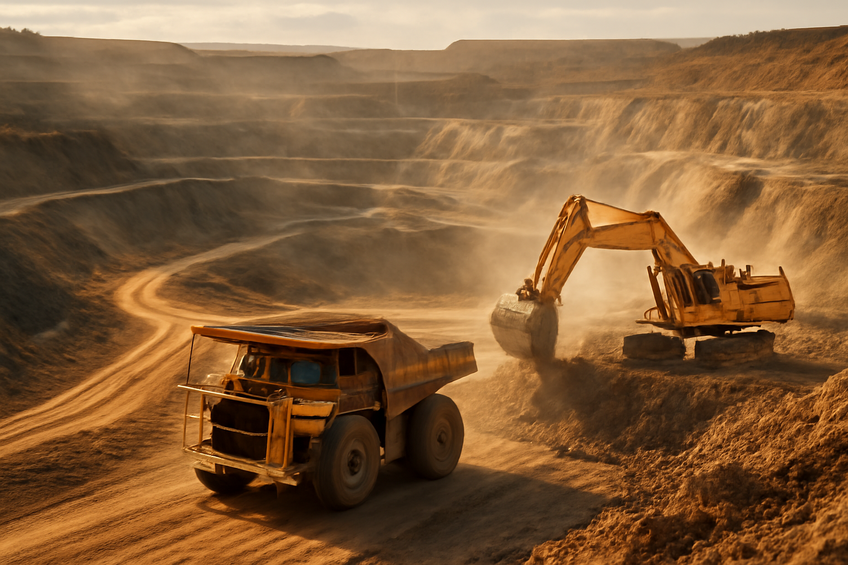
Open-pit mining is the most common method used in large gold mines. It involves removing large quantities of surface material (overburden) to expose the ore beneath. Giant excavators, blast drilling, and haul trucks are used to move ore from the pit to processing facilities. This method is cost-effective for large, low-grade deposits close to the surface.
Underground Mining
When ore deposits are too deep for open-pit mining, underground mining methods are used. Techniques include block caving, long-hole stoping, and cut-and-fill mining. Underground operations are more expensive but allow access to high-grade ore bodies at greater depths.
Heap Leaching
Heap leaching is a process where crushed ore is piled on lined pads and irrigated with a cyanide solution that dissolves the gold. The gold-rich solution is then collected and processed to recover the metal. This method is cost-effective for low-grade oxide ores.
Carbon-in-Leach (CIL) and Carbon-in-Pulp (CIP)
These processes involve adding activated carbon to a cyanide slurry containing dissolved gold. The gold adsorbs onto the carbon, which is then stripped and processed to produce gold bullion. CIL and CIP are commonly used for higher-grade ores and more complex mineralogy.
Pressure Oxidation (POX)
Pressure oxidation is used to treat refractory sulfide ores where gold is locked within sulfide minerals. The ore is subjected to high temperature and pressure in the presence of oxygen, which oxidizes the sulfides and makes the gold accessible for cyanide leaching.
Environmental and Social Considerations in Large Gold Mines
The world’s largest gold mines have a significant environmental and social footprint. Modern mining companies are increasingly focused on sustainable mining practices, including:
- Water management: Minimizing water usage and preventing contamination of local water sources.
- Tailings management: Safely storing and managing mine waste to prevent environmental disasters.
- Community engagement: Working with local communities to ensure that mining benefits are shared and that local people are protected from negative impacts.
- Renewable energy: Transitioning to renewable energy sources such as solar, wind, and hydropower to reduce carbon emissions.
- Land rehabilitation: Restoring mined land to its natural state or to a productive use after mining operations cease.
Gold Production Statistics: How Much Gold Do These Mines Produce?
To put the scale of these operations into perspective, here is a quick summary of estimated annual gold production from the top mines:
- Muruntau (Uzbekistan): ~2,000,000 oz/year
- Carlin Trend (USA): ~3,000,000 oz/year (combined region)
- Grasberg (Indonesia): ~1,000,000 oz/year
- Olympic Dam (Australia): ~140,000 oz/year
- Pueblo Viejo (Dominican Republic): ~800,000 oz/year
- Lihir (Papua New Guinea): ~750,000 oz/year
- Kibali (DRC): ~750,000 oz/year
- Cortez (USA): ~600,000 oz/year
- Boddington (Australia): ~700,000 oz/year
- Goldstrike (USA): ~500,000 oz/year
The Future of Large-Scale Gold Mining
The gold mining industry is rapidly evolving. With many high-grade, easily accessible deposits already mined out, companies are increasingly turning to deeper, more complex ore bodies and remote locations. Technological innovation is playing a critical role, with advances in:
- Automation and robotics: Autonomous haul trucks, drilling equipment, and processing systems are reducing costs and improving safety.
- Artificial intelligence: AI and machine learning are being used to optimize ore processing, predict equipment failures, and improve geological modeling.
- Greener processing: Research into non-cyanide leaching methods and more environmentally friendly processing techniques is gaining momentum.
- Deep mining technology: Advances in refrigeration, ventilation, and rock mechanics are making it possible to mine at increasingly greater depths.
Conclusion
The world’s biggest gold mines are extraordinary industrial operations that combine cutting-edge technology, massive infrastructure, and thousands of skilled workers to extract one of humanity’s most precious resources. From the vast open pits of Muruntau and Carlin Trend to the deep underground operations at Grasberg and Kibali, each mine presents unique challenges and solutions. As global demand for gold remains strong — driven by jewelry, electronics, investment, and central bank reserves — these operations will continue to evolve and innovate to meet the needs of the modern world.
Whether you are an investor, a mining professional, or simply curious about where your gold comes from, understanding the scale and complexity of these operations provides a fascinating insight into one of the world’s most enduring industries.


