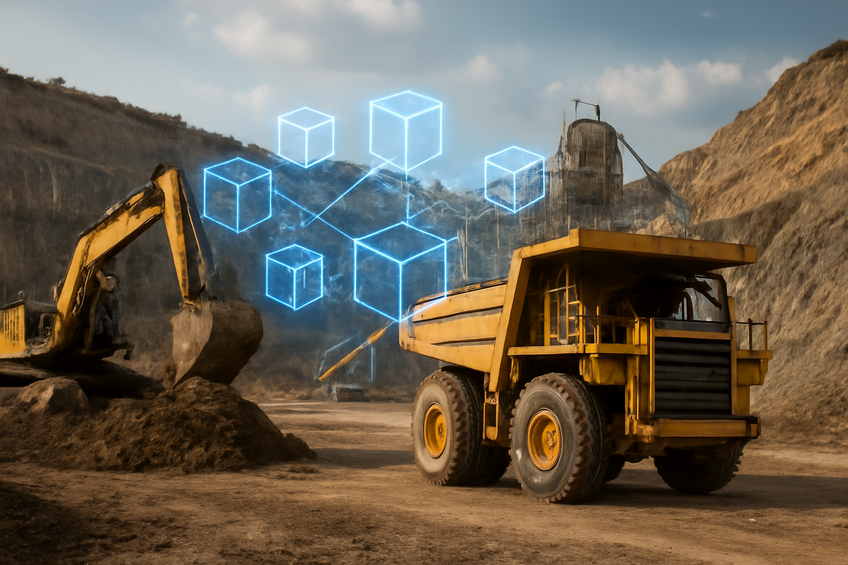
Doing More With Less: The Budget Pressures Driving AI Adoption
Artificial intelligence is reshaping how junior mining companies approach early-stage exploration, offering a route to faster target generation without the overhead of expanded field teams or prolonged drilling campaigns. For junior miners operating in one of the most capital-constrained corners of the resource sector, AI-assisted platforms are increasingly seen not as a luxury but as a competitive necessity.
Junior explorers have always faced an asymmetric challenge: they carry significant geological risk while working with budgets that are a fraction of those available to major producers. Tightening equity markets and cautious institutional investors over recent years have made that squeeze even more acute, pushing management teams to scrutinize every dollar spent on field programs and data acquisition.
The arrival of commercially viable AI platforms purpose-built for mineral exploration has given smaller companies a new lever to pull. Rather than drilling on geological intuition alone, these companies can now run large datasets through machine learning models to rank targets by probability of mineralization — reducing the number of costly drill holes needed to confirm or rule out a prospect.
How AI Platforms Are Being Applied in the Field
The practical applications of AI in junior exploration are broader than many outside the sector might expect. These platforms don’t replace geologists; they augment them by processing volumes of geophysical, geochemical, and remote-sensing data that no team could interpret manually within a practical timeframe or budget.
Target Generation and Prioritization
Machine learning models trained on historical deposit data can identify patterns in regional datasets that correlate with known mineralization. When applied to a new project area, these models generate ranked target lists that help exploration teams decide where to concentrate ground truthing and early-stage drilling. The result is a more disciplined allocation of drilling budgets, with lower-priority anomalies deferred rather than drilled on speculation.
Some platforms integrate publicly available geological survey data with a company’s proprietary datasets, giving junior teams access to analytical depth that previously required either a large in-house technical staff or expensive consulting engagements. Cloud-based delivery models mean even single-geologist operations can run sophisticated analyses without dedicated IT infrastructure.
Reprocessing Legacy Data
One of the more immediately practical applications for cash-conscious juniors is reprocessing legacy geophysical and geochemical datasets using modern AI tools. Many junior companies hold ground with historical data collected under older methodologies — airborne magnetics, soil sampling grids, or induced polarization surveys — that was never fully interpreted. AI platforms can extract new signal from this existing material, generating fresh targets without requiring a single additional day in the field.
This approach has particular appeal because the capital outlay is relatively modest compared with launching a new ground program. It also allows companies to demonstrate technical progress to shareholders and prospective partners at a point in the capital cycle when visible activity matters.
The Economics of AI-Assisted Exploration
The cost structure of AI platform access has evolved considerably. Early adopters in the major and mid-tier producer space were often working with bespoke systems developed at significant internal expense. The market has since matured, with specialized geoscience AI vendors offering subscription or project-based pricing that brings these capabilities within reach of junior budgets.
The economic logic for a junior explorer can be summarized across several dimensions:
- Reduced drill-hole count: Better pre-drill targeting means fewer holes needed to test a concept, directly cutting one of the largest line items in any exploration program.
- Faster decision cycles: Rapid data integration and target scoring shortens the time between data collection and the decision to advance or drop a project.
- Lower consulting dependency: Platforms with strong interpretive outputs reduce the need for recurring specialist consulting, particularly for geological interpretation and structural analysis.
- Improved investor communication: Data-driven target rationale gives management teams a more defensible narrative when presenting programs to retail and institutional investors.
- Competitive positioning in joint ventures: Demonstrating rigorous, technology-assisted exploration methodology can be an advantage when seeking farm-in partners or presenting to major producers.
Limitations and Realistic Expectations
AI platforms are not a discovery shortcut, and experienced technical teams are clear-eyed about the boundaries. Machine learning models are only as reliable as the training data they are built on, which creates known blind spots in regions with limited historical exploration or poorly documented deposit analogs. In underexplored terranes, the absence of comparative data can limit model confidence significantly.
Integration also requires geological oversight. An anomaly flagged as high-priority by an algorithm still demands expert scrutiny before capital is committed. Companies that treat AI outputs as final answers rather than decision-support inputs risk misallocating exactly the budgets they were trying to protect.
There is also a skills dimension. Getting meaningful output from these platforms requires geoscientists who understand both the underlying geology and the logic of the models they are using. The learning curve is real, and juniors without in-house technical capacity may need to invest in training or partnerships to extract full value.
As AI platforms continue to mature and competition among vendors intensifies, pricing and capability are both moving in directions that favor junior adopters. Companies that build institutional knowledge in AI-assisted workflows now are likely to hold a meaningful methodological edge as exploration activity picks up across commodity cycles — making early investment in these tools a strategic decision as much as a budgetary one.