





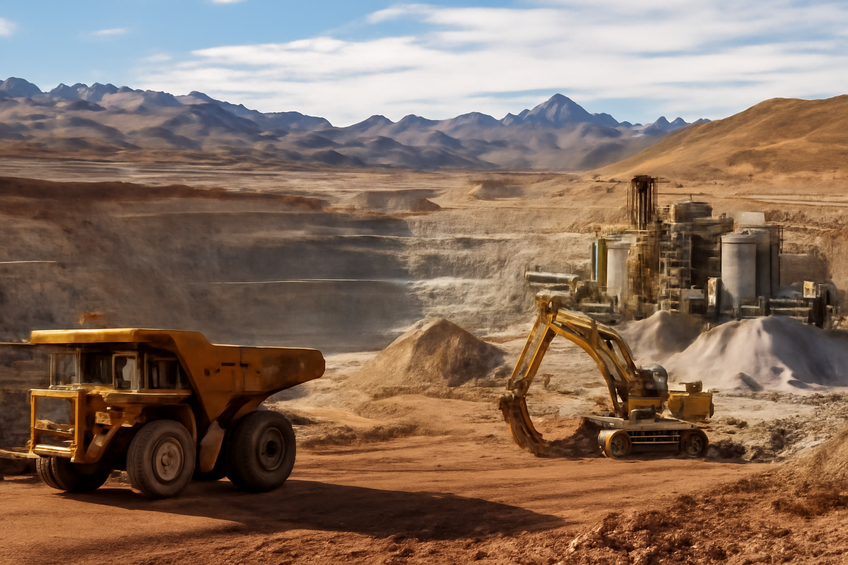
A significant lithium deposit has been identified beneath salt flat formations in the Andean region, adding fresh momentum to an already intensely competitive race to secure critical mineral resources across South America’s celebrated Lithium Triangle. The discovery underscores the continued geological prospectivity of the high-altitude puna environment, where brine-hosted lithium concentrations have historically defined the global supply landscape for this strategically vital metal.
The Andean Salt Flats: A Proven Lithium Province
The Lithium Triangle — encompassing portions of Argentina, Bolivia, and Chile — hosts a substantial share of the world’s known lithium brine resources. Salt flats, or salares, in this zone formed over millions of years as mineral-rich groundwater evaporated in the thin, arid air above 3,500 metres elevation, concentrating lithium, potassium, boron, and associated elements into economically significant brine deposits. The geological conditions that produced known giants such as the Salar de Atacama and Salar de Uyuni persist across a much wider footprint, and exploration campaigns continue to delineate new targets with regularity.
Brine-hosted deposits differ fundamentally from hard-rock spodumene operations in terms of extraction methodology, water management requirements, and processing infrastructure. Understanding those distinctions is essential context for evaluating any new discovery in this corridor, where environmental sensitivity and community relations carry as much weight as resource grade.
What a New Discovery Means for the Region
Resource Scale and Grade Considerations
Not all lithium discoveries translate into viable projects. The critical variables for any Andean brine system include lithium concentration in the brine, the ratio of magnesium to lithium — a key factor affecting processing complexity and cost — brine permeability within the salar aquifer, and the depth and lateral continuity of the resource. Early-stage discoveries typically require extensive drilling, pump tests, and hydrogeological modelling before resource estimates reach a level of confidence meaningful to project finance.
Investors and industry analysts tracking a new find in this region will focus on the following indicators as exploration advances:
Advertisement
- Lithium grade: Brine concentrations that justify commercial extraction typically sit well above regional background levels, and the gap between a mineralised system and a high-grade salar is commercially significant.
- Magnesium-to-lithium ratio: Elevated magnesium complicates conventional evaporation-pond processing and can substantially increase capital and operating expenditure.
- Aquifer depth and thickness: Shallower, thicker brine-bearing horizons generally support more favourable economics and lower drilling costs during both exploration and production.
- Water availability: Processing lithium brines in high-altitude desert environments requires careful water management, an issue that has drawn regulatory and community scrutiny across the Triangle.
- Proximity to infrastructure: Road access, power supply, and distance to processing or export facilities have a direct bearing on development timelines and capital requirements.
Sovereign and Regulatory Context
The jurisdiction in which a discovery sits shapes its development trajectory as much as the geology does. Argentina’s individual provinces retain significant authority over mining permitting, and the country’s relatively open foreign investment framework has attracted a broad range of junior and major explorers. Chile, by contrast, has been navigating a longer-running debate over lithium nationalisation and the role of state enterprise in future development. Bolivia’s sector remains heavily state-directed, with international participation historically constrained. A new discovery’s path from drill result to producing asset will depend heavily on which regulatory environment governs it.
Community engagement with indigenous groups holding ancestral ties to the puna and its water systems has become a non-negotiable step in permitting across all three countries. Projects that have managed this process poorly have faced delays, legal challenges, and reputational damage that technical merit alone cannot overcome.
Broader Market Implications
Global demand for battery-grade lithium remains structurally supported by the continued build-out of electric vehicle manufacturing capacity and stationary energy storage deployment. Supply, however, has proven lumpy — periods of rapid expansion have periodically outpaced demand, pressuring spot prices, while tightening markets have renewed urgency around long-lead resource development. A new discovery of meaningful scale in the Andes adds a data point to the longer-term supply picture, though the gap between discovery and first production typically spans many years and multiple capital raises.
Major battery manufacturers, automotive OEMs, and national governments with industrial policy ambitions in the energy transition space have all intensified efforts to secure upstream lithium exposure. That demand for offtake agreements and strategic equity positions has made well-located, high-grade Andean discoveries attractive to a wider pool of capital than would have been the case a decade ago.
As technical work on this discovery advances through resource definition drilling and environmental baseline studies, the industry will be watching closely to determine whether it represents a genuinely district-scale addition to the Andean lithium inventory or an early-stage anomaly requiring further delineation. Either way, it reinforces the message that the high-altitude salt flats of South America remain one of the most consequential frontiers in critical minerals exploration.
Advertisement


