





A Critical Bottleneck in Advanced Alloy Development
Scandium’s scarcity continues to frustrate the commercialization of high-performance aluminium-scandium alloys, a material class that aerospace manufacturers have long regarded as a step-change in structural efficiency. Despite well-documented engineering advantages, the supply chain for this rare element remains too thin, too concentrated, and too unpredictable to support the kind of industrial-scale procurement that aerospace qualification programs demand.
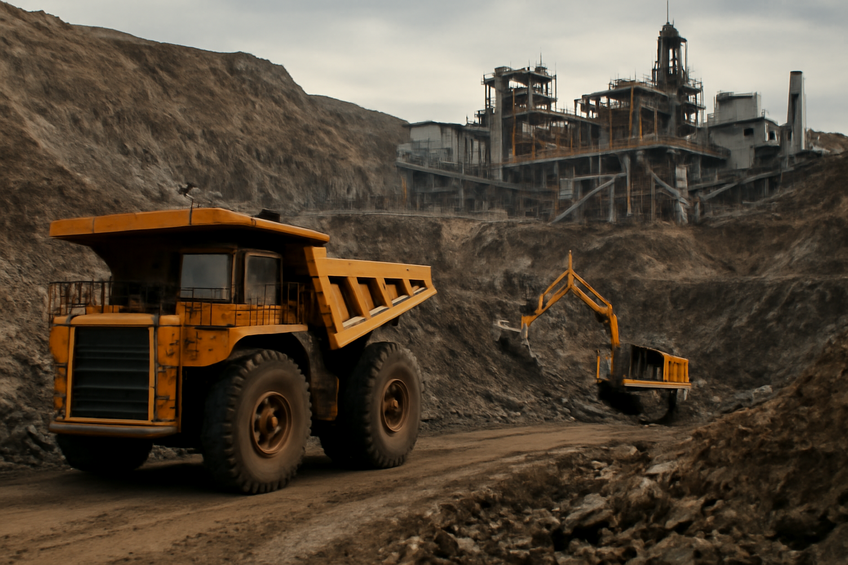
The core problem is not that scandium is geologically rare in absolute terms — it appears in the earth’s crust at concentrations comparable to some established critical minerals — but that it rarely accumulates in economically mineable deposits. Most scandium today reaches the market as a byproduct of processing other commodities, which means supply is structurally dependent on the fortunes of host-metal mining, not on demand signals from end users.
Why Aerospace Values Aluminium-Scandium Alloys
Even small additions of scandium to aluminium produce measurable improvements in strength, weldability, and resistance to fatigue and corrosion. For aerospace applications — where every gram of structural weight carries fuel-burn and payload implications across an aircraft’s entire service life — those gains are commercially significant, not merely academic.
The alloys are particularly attractive for welded structures, where scandium refines the grain structure at weld zones and largely eliminates the strength loss that typically occurs in conventional aluminium welds. Additive manufacturing is another area generating strong interest, as scandium-modified aluminium powders produce parts with superior mechanical properties compared with standard aerospace aluminium grades.
Applications Driving Near-Term Demand
- Airframe structural components where weight reduction translates directly to operating economics
- Fuel system and cryogenic tank assemblies benefiting from the alloys’ low-temperature performance
- Additive-manufactured brackets, housings, and ducts where complex geometries are otherwise difficult to produce in high-strength aluminium
- Defence and space launch structures where performance requirements routinely justify higher material costs
- Unmanned aerial vehicle frames where strength-to-weight ratios are critical at smaller production volumes
In each of these segments, the engineering case for aluminium-scandium is broadly accepted. The obstacle is not technical; it is logistical and economic.
Advertisement
Supply Chain Fragility and Its Commercial Consequences
Scandium supply has historically been dominated by a small number of producing countries, with output tightly linked to the processing of laterite nickel ores, titanium minerals, and certain rare earth operations. This byproduct dependency creates a supply profile that is inelastic in both directions: it does not expand readily when aerospace demand grows, nor does it reflect the true value that end users place on the material.
For aerospace procurement teams and alloy producers, this creates a qualification dilemma. Aerospace material specifications require demonstrated supply continuity over multi-year horizons. A manufacturer committing to a scandium-bearing alloy for a new aircraft program needs confidence that the material will be available in consistent quality and sufficient volume for the full production run — a commitment that existing scandium suppliers have struggled to offer credibly.
Price Volatility as a Design Constraint
Scandium oxide pricing has historically been volatile, subject to sharp movements driven by shifts in Chinese export policy, changes in byproduct host-metal markets, and speculative inventory cycles. That volatility is not merely a cost concern; it becomes a design constraint. Engineering teams and procurement planners are reluctant to commit to a material whose input cost could move substantially between program development and serial production.
Alloy producers have responded by developing formulations that minimize scandium loading while preserving as much of the performance benefit as possible, and by exploring partial substitution with zirconium and other grain-refining agents. These approaches moderate cost exposure but typically yield properties that fall short of fully optimized aluminium-scandium compositions.
Emerging Primary Production Projects and Their Limitations
A number of junior mining companies and larger diversified producers have advanced scandium-primary or scandium-significant projects in recent years, targeting markets in North America, Australia, and Europe that are seeking to reduce dependence on Asian supply chains. Some projects have reached feasibility study or early construction stages, signalling genuine progress toward a more robust supply base.
Advertisement
However, the path from a credible mining project to a qualified aerospace supply chain involves several additional steps that extend timelines considerably:
- Consistent production of scandium oxide or triflate at the purity grades aerospace applications require
- Partnership with master alloy producers capable of incorporating scandium at controlled addition levels
- Qualification testing under aerospace standards, which typically spans multiple years and requires documented traceability back to the raw material source
- Long-term offtake or supply agreements that satisfy procurement risk requirements at the airframer level
Each stage introduces delay, and few scandium projects have yet navigated all of them successfully at commercial scale.
Industry Response and Strategic Positioning
Aerospace primes and their tier-one suppliers have not stood still. Several have entered into early-stage supply agreements or strategic partnerships with scandium developers, seeking to lock in future access while helping smaller producers justify the capital investment needed to scale. Government interest in critical mineral security — particularly in North America and the European Union — has added a policy dimension, with grant funding and offtake support mechanisms beginning to lower the financial barriers for new entrants.
Alloy standards bodies have also been active, updating specifications to formally recognize aluminium-scandium compositions and providing the regulatory foundation that qualification programs require.
The trajectory for aluminium-scandium alloys in aerospace remains positive, but the commercialization curve has repeatedly proven longer than initial optimism suggested. As primary scandium projects mature and supply chain infrastructure develops, the window between technical readiness and commercial deployment should narrow — though the industry should expect that timeline to be measured in years, not quarters.
Advertisement


