




Gold has fascinated humanity for thousands of years, driving exploration, shaping economies, and fueling some of the most ambitious engineering projects on Earth. Today, massive gold mines scattered across the globe extract thousands of ounces of this precious metal every single day. Whether you are an investor, geology enthusiast, or simply curious about the world’s most valuable natural resources, understanding where gold comes from and how much is produced daily can offer incredible insights into the global economy.
In this post, we dive deep into the top 10 biggest gold mines in the world, exploring their locations, ownership, history, and most importantly, their daily production capacity.
What Makes a Gold Mine “The Biggest”?
When ranking the world’s largest gold mines, size can be measured in several ways — total land area, proven gold reserves, or annual and daily gold production output. For this list, we primarily focus on daily production capacity combined with overall reserve size and annual output, giving you the most comprehensive picture of each mine’s scale and significance.
1. Muruntau Gold Mine – Uzbekistan
Overview
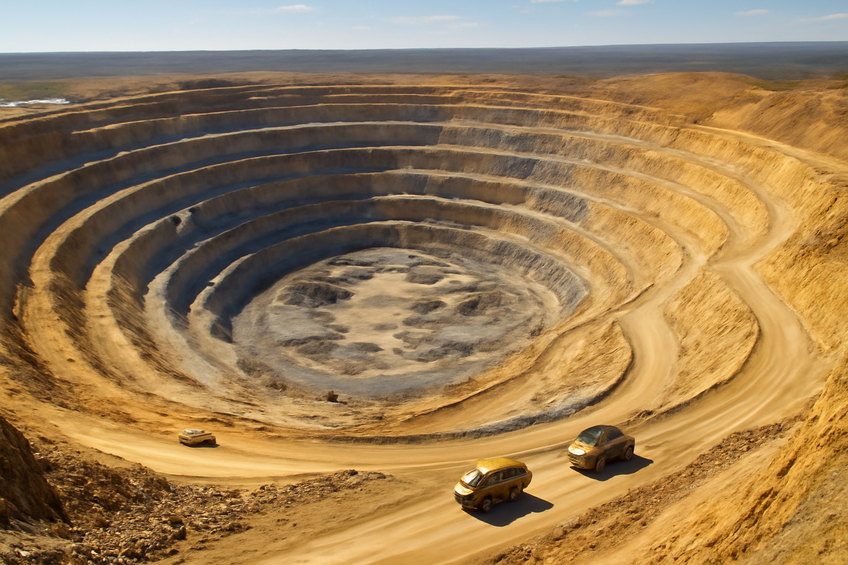
Located in the Kyzylkum Desert of Uzbekistan, the Muruntau Gold Mine is widely considered the largest open-pit gold mine in the world. Operated by Navoi Mining and Metallurgical Combinat (NMMC), this massive operation has been active since 1967 and continues to be one of the most productive gold mines on the planet.
Daily Production Capacity
Muruntau produces an estimated 5,500 to 6,000 ounces of gold per day, contributing to an annual output of approximately 2 million ounces. The mine’s pit stretches over 3.5 kilometers in length and 2.5 kilometers in width, reaching depths of more than 560 meters.
Advertisement
Key Facts
- Location: Kyzylkum Desert, Uzbekistan
- Operator: Navoi Mining and Metallurgical Combinat
- Annual Output: ~2 million ounces
- Mine Type: Open-pit
2. Carlin Trend – Nevada, USA
Overview
The Carlin Trend in Nevada is not a single mine but rather a geological belt of gold deposits stretching approximately 90 kilometers. Operated largely by Nevada Gold Mines, a joint venture between Barrick Gold and Newmont Corporation, this region collectively ranks as one of the most productive gold-producing zones in the world.
Daily Production Capacity
The combined operations across the Carlin Trend produce upward of 4,500 to 5,000 ounces of gold daily, making it a cornerstone of American gold production and a significant contributor to global supply.
Key Facts
- Location: Elko and Eureka Counties, Nevada, USA
- Operator: Nevada Gold Mines (Barrick & Newmont JV)
- Annual Output: ~1.5 to 1.8 million ounces
- Mine Type: Multiple open-pit and underground operations
3. Grasberg Mine – Papua, Indonesia
Overview
The Grasberg Mine in the remote highlands of Papua, Indonesia, is one of the most extraordinary mining operations in the world. Operated by PT Freeport Indonesia, a subsidiary of Freeport-McMoRan, Grasberg is not only one of the largest gold mines but also one of the largest copper mines on Earth.
Daily Production Capacity
Grasberg produces approximately 3,500 to 4,500 ounces of gold per day, depending on operational phases. The mine is transitioning from an open-pit to an underground block caving operation, which is expected to sustain and potentially increase production levels in coming decades.
Key Facts
- Location: Papua Province, Indonesia
- Operator: PT Freeport Indonesia
- Annual Output: ~1.3 to 1.5 million ounces (gold equivalent)
- Mine Type: Transitioning from open-pit to underground
4. Olimpiada Mine – Krasnoyarsk, Russia
Overview
Situated in the Krasnoyarsk region of Siberia, the Olimpiada Mine is Russia’s largest gold mine and one of the biggest in the world. Operated by Polyus, Russia’s leading gold mining company, Olimpiada has been a major production hub since the early 1990s.
Advertisement
Daily Production Capacity
Olimpiada has a daily production capacity of approximately 3,000 to 4,000 ounces of gold, with an annual output consistently exceeding 1.3 million ounces. The mine processes refractory ore using bio-oxidation technology, making it a technologically advanced operation.
Key Facts
- Location: Krasnoyarsk Krai, Russia
- Operator: Polyus Gold
- Annual Output: ~1.3 million ounces
- Mine Type: Open-pit with bio-oxidation processing
5. Pueblo Viejo Mine – Dominican Republic
Overview
The Pueblo Viejo Mine in the Dominican Republic is a joint venture between Barrick Gold (60%) and Newmont Corporation (40%). Situated in the Sánchez Ramírez Province, this mine is one of the largest gold producers in the Americas and a critical asset for both companies.
Daily Production Capacity
Pueblo Viejo produces approximately 2,500 to 3,200 ounces of gold per day, with annual production figures ranging between 800,000 and 1 million ounces. Expansion projects currently underway are expected to significantly boost its output in the coming years.
Key Facts
- Location: Sánchez Ramírez Province, Dominican Republic
- Operator: Barrick Gold (60%) & Newmont (40%)
- Annual Output: ~800,000 to 1 million ounces
- Mine Type: Open-pit
6. Lihir Mine – Papua New Guinea
Overview
The Lihir Gold Mine, operated by Newcrest Mining, is located on Lihir Island in Papua New Guinea. What makes this mine truly unique is its location inside an active volcanic crater, requiring continuous geothermal water management to keep mining operations functional.
Daily Production Capacity
Lihir produces around 2,200 to 3,000 ounces of gold per day, with annual production typically between 800,000 and 900,000 ounces. The mine holds one of the largest gold deposits in the world, with reserves estimated at over 40 million ounces.
Advertisement
Key Facts
- Location: Lihir Island, Papua New Guinea
- Operator: Newcrest Mining
- Annual Output: ~800,000 to 900,000 ounces
- Mine Type: Open-pit (active volcanic setting)
7. Kibali Gold Mine – Democratic Republic of Congo
Overview
The Kibali Gold Mine is one of the largest gold mines in Africa, located in the Haut-Uélé Province of the northeastern Democratic Republic of Congo (DRC). Operated by Kibali Goldmines, a joint venture between Barrick Gold (45%), AngloGold Ashanti (45%), and Sociéte Miniére de Kilo-Moto (10%), the mine stands as a benchmark for responsible mining in challenging environments.
Daily Production Capacity
Kibali produces approximately 2,000 to 2,500 ounces of gold per day, with annual production figures around 700,000 to 800,000 ounces. The mine uses hydroelectric power generated from local rivers, making it one of the most energy-efficient large-scale gold mines in the world.
Key Facts
- Location: Haut-Uélé Province, DRC
- Operator: Barrick Gold & AngloGold Ashanti (JV)
- Annual Output: ~700,000 to 800,000 ounces
- Mine Type: Open-pit and underground
8. Boddington Gold Mine – Western Australia
Overview
Located approximately 130 kilometers southeast of Perth, the Boddington Gold Mine is Australia’s largest gold mine and one of the biggest in the world. Fully owned and operated by Newmont Corporation, Boddington is a significant contributor to Australia’s status as the world’s second-largest gold producer.
Daily Production Capacity
Boddington produces approximately 1,800 to 2,500 ounces of gold per day, with annual production ranging between 650,000 and 750,000 ounces. The mine also produces significant quantities of copper as a byproduct.
Key Facts
- Location: Western Australia, Australia
- Operator: Newmont Corporation
- Annual Output: ~650,000 to 750,000 ounces
- Mine Type: Open-pit
9. South Deep Mine – Gauteng, South Africa
Overview
The South Deep Gold Mine, operated by Gold Fields, is one of the deepest and largest gold mines in the world. Located in the Witwatersrand Basin of Gauteng Province, South Africa, this mine holds some of the most significant remaining gold reserves on the African continent.
Advertisement
Daily Production Capacity
South Deep produces approximately 1,200 to 1,800 ounces of gold per day, with annual production around 400,000 to 500,000 ounces. The mine descends to depths of over 2,900 meters, making it one of the most technically challenging mining operations in the world.
Key Facts
- Location: Gauteng Province, South Africa
- Operator: Gold Fields
- Annual Output: ~400,000 to 500,000 ounces
- Mine Type: Deep underground
10. Cerro Negro Mine – Santa Cruz, Argentina
Overview
The Cerro Negro Mine in the Santa Cruz Province of Argentina is one of the highest-grade gold mines in the world. Operated by Newmont Corporation, Cerro Negro extracts gold and silver from high-grade epithermal vein deposits, making it an exceptionally cost-efficient operation despite its relatively smaller scale compared to other mines on this list.
Daily Production Capacity
Cerro Negro produces approximately 1,000 to 1,500 ounces of gold per day, with annual output ranging between 350,000 and 500,000 ounces. Its exceptional ore grades make it one of the most profitable gold mines per ton of ore processed anywhere on Earth.
Key Facts
- Location: Santa Cruz Province, Argentina
- Operator: Newmont Corporation
- Annual Output: ~350,000 to 500,000 ounces
- Mine Type: Underground
Comparison Table: Top 10 Biggest Gold Mines Daily Production
| Rank | Mine Name | Country | Operator | Daily Production (oz) |
|---|---|---|---|---|
| 1 | Muruntau | Uzbekistan | NMMC | 5,500 – 6,000 |
| 2 | Carlin Trend | USA | Nevada Gold Mines | 4,500 – 5,000 |
| 3 | Grasberg | Indonesia | PT Freeport Indonesia | 3,500 – 4,500 |
| 4 | Olimpiada | Russia | Polyus Gold | 3,000 – 4,000 |
| 5 | Pueblo Viejo | Dominican Republic | Barrick/Newmont | 2,500 – 3,200 |
| 6 | Lihir | Papua New Guinea | Newcrest Mining | 2,200 – 3,000 |
| 7 | Kibali | DR Congo | Barrick/AngloGold | 2,000 – 2,500 |
| 8 | Boddington | Australia | Newmont | 1,800 – 2,500 |
| 9 | South Deep |


