




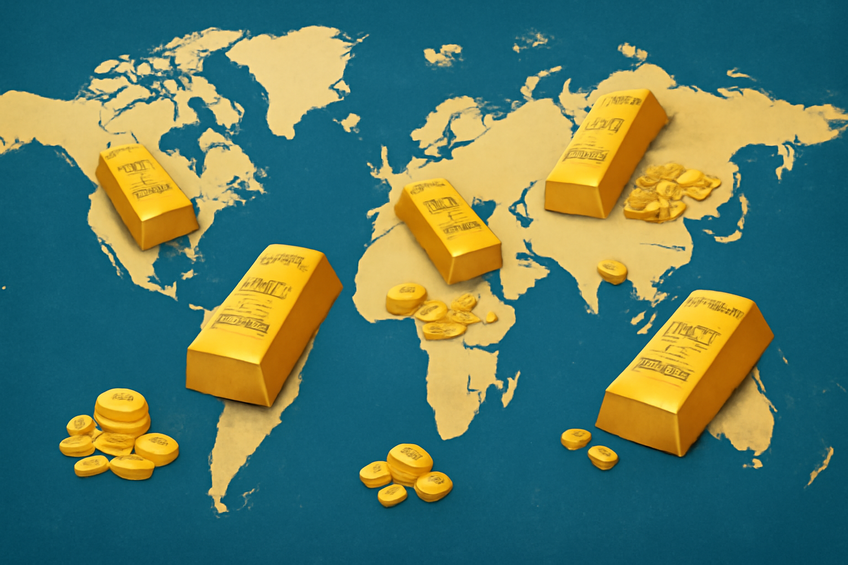
Gold has long been one of the most sought-after precious metals in the world, driving economies, fueling investments, and shaping geopolitical landscapes. As we move through 2025, global gold production continues to evolve, with certain nations standing out as dominant forces in the mining industry. Understanding which countries lead gold production can offer valuable insights for investors, traders, and enthusiasts alike. Here is a comprehensive look at the top 10 gold mining countries dominating global production in 2025.
Why Gold Mining Still Matters in 2025
Despite the rise of digital assets and alternative investments, gold remains a cornerstone of global finance. Central banks continue to stockpile it, industries rely on it for electronics and medical devices, and consumers demand it for jewelry. The countries that lead in gold production wield significant economic influence, making the global gold mining landscape critically important to monitor.
Top 10 Gold Producing Countries in 2025
1. China – The World’s Largest Gold Producer
China has held the top spot in gold production for over a decade and continues to dominate in 2025. Producing an estimated 370–390 tonnes annually, China benefits from vast mineral reserves spread across provinces like Shandong, Henan, and Fujian. State-backed mining operations and significant technological investment have allowed China to maintain its leading position despite environmental regulations tightening across the sector.
2. Australia – A Rising Powerhouse in Gold Mining
Australia has firmly secured its place as the second-largest gold producer in the world, with annual output hovering around 320–340 tonnes. The Western Australia region, particularly the Super Pit gold mine in Kalgoorlie, remains one of the most productive open-pit gold mines globally. Australia’s stable political environment, advanced mining infrastructure, and rich geological reserves make it a top destination for gold mining investment.
3. Russia – Major Gold Reserves and Production
Russia consistently ranks among the top three gold producers, outputting approximately 300–320 tonnes per year. Siberia and the Far East regions host some of the world’s most extensive gold deposits. Despite ongoing geopolitical tensions and international sanctions, Russia’s domestic mining sector remains robust, with companies like Polyus leading large-scale extraction operations.
4. Canada – North America’s Gold Mining Leader
Canada produces around 200–220 tonnes of gold annually, drawing from rich deposits in Ontario, Quebec, and British Columbia. The country is home to some of the world’s most innovative and sustainable mining practices. With strong regulatory frameworks and significant foreign investment, Canada remains a critical player in North American and global gold markets.
5. United States – Consistent Gold Output from Nevada
The United States produces roughly 170–200 tonnes of gold per year, with Nevada accounting for the lion’s share of domestic production. The Carlin Trend and Cortez Hills are among the most productive gold mining regions in North America. Companies such as Nevada Gold Mines, a joint venture between Barrick and Newmont, continue to drive significant output from American soil.
6. Ghana – Africa’s Top Gold Producer
Ghana has overtaken South Africa as the leading gold producer on the African continent, generating approximately 130–150 tonnes annually. The Ashanti Gold Belt remains one of Africa’s most prolific gold-bearing geological formations. Ghana’s government has actively promoted responsible mining and attracted major international mining corporations to invest in its thriving sector.
7. Indonesia – Southeast Asia’s Gold Giant
Indonesia contributes around 100–130 tonnes of gold to the global supply each year. The Grasberg mine in Papua, one of the world’s largest gold and copper deposits, is a key driver of Indonesia’s output. Managed by Freeport-McMoRan and PT Indonesia Asahan Aluminium, Grasberg continues to be a cornerstone of the nation’s mining economy in 2025.
8. Peru – South America’s Gold Mining Heavyweight
Peru produces approximately 100–120 tonnes of gold annually, ranking it as one of South America’s most significant gold producers. Mines such as Yanacocha and Lagunas Norte contribute substantially to Peru’s output. However, the country continues to navigate challenges related to community relations and environmental sustainability, which have occasionally disrupted production levels.
9. South Africa – A Historic Gold Producer Adapting to Modern Challenges
Once the undisputed world leader in gold production, South Africa now produces around 90–100 tonnes per year. Aging infrastructure, deep underground mines, labor strikes, and energy shortages have contributed to declining output over the decades. Nevertheless, regions like the Witwatersrand Basin still hold enormous historical and current significance in global gold mining.
10. Mexico – A Growing Force in Gold Production
Mexico rounds out the top 10 with an annual gold production of approximately 80–100 tonnes. The states of Sonora, Durango, and Sinaloa are home to major mining operations. Mexico’s relatively low production costs and favorable geology continue to attract significant mining investment, and the country is expected to grow its gold output further in the coming years.
Key Factors That Influence Global Gold Production
Several critical factors determine how much gold a country can produce and sustain over time. Understanding these elements helps explain the rankings and future trends in the global gold mining industry.
Geological Reserves and Ore Quality
Countries with abundant high-grade gold deposits naturally have an advantage. Nations like Australia and Russia benefit from extensive geological formations that yield significant quantities of gold per tonne of ore processed.
Technological Advancements in Mining
In 2025, automation, artificial intelligence, and advanced extraction techniques have transformed how gold is mined. Countries that invest heavily in mining technology tend to produce more efficiently while reducing environmental impact and operational costs.
Political Stability and Regulatory Environment
Stable governments with clear, investor-friendly mining regulations attract more capital and expertise. Countries with unpredictable political climates or harsh regulatory environments often struggle to maximize their gold production potential.
Environmental and Sustainability Standards
As global awareness of environmental issues grows, mining companies face increasing pressure to adopt sustainable practices. Countries with strict environmental standards are pushing the industry toward greener gold production methods, influencing where and how gold is mined.
Global Gold Production Trends to Watch in 2025
The gold mining industry is undergoing significant transformation. Several emerging trends are shaping the landscape of global gold production in 2025 and beyond.
Increased Focus on ESG Compliance
Environmental, Social, and Governance (ESG) criteria are becoming non-negotiable for major mining investors. Companies and countries that fail to meet ESG standards risk losing access to capital markets, driving a widespread shift toward responsible mining practices.
Exploration in Untapped Regions
With many traditional gold deposits maturing or nearing depletion, mining companies are increasingly exploring remote and previously inaccessible regions in Africa, South America, and Central Asia. New discoveries in these areas could reshuffle the rankings of top gold-producing nations in the years ahead.
Rising Gold Demand Driving Production Investment
Strong gold demand from central banks, technology sectors, and retail investors continues to incentivize increased production investment globally. Countries with significant untapped reserves are likely to see a surge in exploration activity and new mine development throughout 2025.
Investment Opportunities in Gold Mining Countries
For investors looking to capitalize on gold production trends, understanding the top gold-producing nations provides a strategic advantage. Whether through gold mining stocks, exchange-traded funds (ETFs), or direct commodity investment, the countries listed above represent some of the most lucrative opportunities in the global precious metals market.
Diversifying investments across multiple gold-producing regions can help mitigate geopolitical and operational risks while maximizing exposure to the long-term upward trajectory of gold value. Countries like Australia and Canada are often favored for their political stability, while emerging producers in Africa and Southeast Asia offer higher growth potential.
Conclusion
The global gold mining industry in 2025 is dynamic, competitive, and increasingly shaped by technological innovation, environmental responsibility, and geopolitical factors. China, Australia, and Russia continue to lead the pack, while nations like Ghana, Indonesia, and Mexico are steadily growing their influence. Whether you are an investor, a mining professional, or simply a gold enthusiast, keeping a close eye on these top 10 gold mining countries will be essential for navigating the precious metals market in the years ahead.
As gold remains a timeless store of value and a critical industrial resource, the countries that master efficient, sustainable, and large-scale gold production will continue to hold significant power in the global economy well beyond 2025.


