





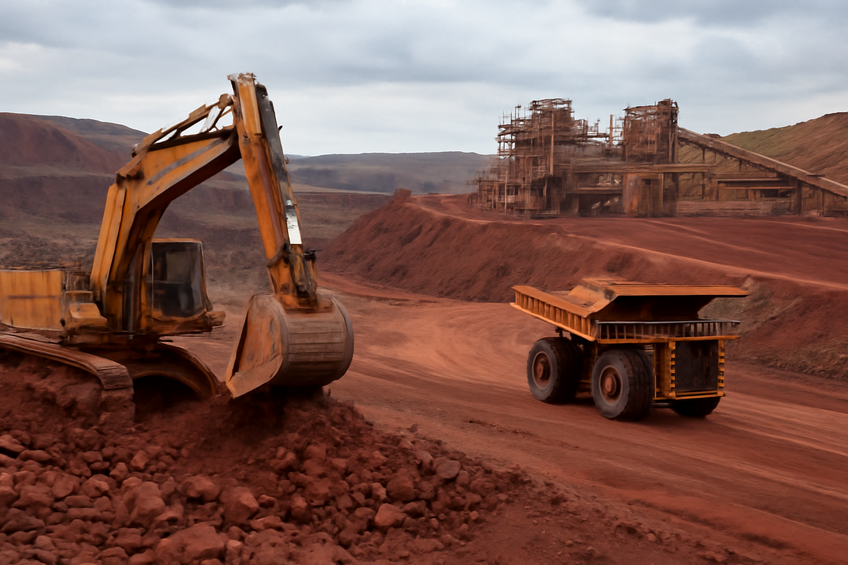
Grade Deterioration Reshapes the Pilbara’s Production Outlook
Iron ore grade decline across the Pilbara region of Western Australia is emerging as one of the most consequential structural challenges facing major producers, as mining operations push into lower-quality ore bodies that were once considered uneconomic or marginal. Decades of prioritising high-grade direct-shipping ore have drawn down the richest surface and near-surface deposits, forcing operators to mine deeper and blend more aggressively to meet product specifications demanded by steel mills.
The Pilbara’s reputation was built on the abundance of its high-grade hematite, but the geological reality is that the highest-quality material sits near the top of ore bodies. As those zones are progressively exhausted, the ore being exposed contains higher proportions of silica, alumina, and phosphorus — impurities that penalise producers in spot and contract markets alike.
The Geology Behind the Grade Slide
The Pilbara’s iron ore deposits are predominantly Marra Mamba and Brockman-type formations, renowned historically for delivering ore grades well above the global seaborne average. However, as pits extend to greater depths, miners increasingly encounter transitional and lower-grade zones where the iron content drops and gangue mineral content rises. This is not an isolated event at a single mine; it is a region-wide trend that reflects the maturity of the Pilbara iron ore province.
Blending as a Mitigation Strategy
To maintain saleable product grades, operators have leaned heavily on blending — combining higher-grade and lower-grade material from multiple pits or stockpiles to achieve a consistent output specification. While blending is a well-established technique, it adds operational complexity, increases handling costs, and has practical limits when lower-grade feed becomes the dominant fraction rather than a minor component.
Processing Investments to Close the Gap
Some operators are investing in beneficiation infrastructure — including wet screening, dense media separation, and fine ore processing circuits — to upgrade run-of-mine material before it reaches port. These capital investments can partially offset natural grade decline, but they carry significant costs and consume more water and energy per tonne of product, narrowing margins and complicating sustainability reporting.
Advertisement
Market Implications for Steel Mills and Pricing
Steel mills, particularly those operating large blast furnaces, are sensitive to ore quality. Higher impurity loads in iron ore feed translate directly into increased flux consumption, higher slag volumes, and reduced furnace productivity. As the average grade of Pilbara shipments edges lower, buyers face a choice between paying a premium for the diminishing supply of higher-grade product or adjusting their blending strategies to incorporate more pellets or concentrate from other origins.
The pricing dynamics respond accordingly. Grade premiums and discounts in the iron ore market have historically been volatile, but a structural reduction in high-grade availability from one of the world’s largest export regions tends to widen the discount applied to lower-grade cargoes and elevate the premium for material above benchmark grade. For Pilbara producers, this dynamic creates a revenue headwind that compounds the operational challenge of declining in-situ grades.
Key market pressures stemming from grade deterioration include:
- Wider grade discounts applied to below-benchmark iron ore in Chinese and regional steel mill procurement
- Increased competition from high-grade suppliers in Brazil, Canada, and West Africa who can offer consistent 65%-plus product
- Greater scrutiny from mills targeting lower carbon intensity, since lower-grade ores require more energy to process into usable iron units
- Blending cost inflation as operators source complementary high-grade material to maintain product averages
- Capital expenditure pressure as beneficiation and infrastructure upgrades become necessary rather than optional
Competitive Positioning and Strategic Responses
The grade decline dynamic does not affect all Pilbara operators equally. Companies with more diversified ore body portfolios — including access to higher-grade deposits not yet in full production — are better positioned to manage the transition. Those more dependent on a narrow set of mature, high-volume pits face a steeper challenge in sustaining product quality without significant capital deployment.
Junior and Mid-Tier Opportunities
Paradoxically, grade deterioration among the majors creates openings for junior and mid-tier producers developing higher-grade or more amenable deposits elsewhere in Western Australia and beyond. Projects that may have struggled to attract financing when premium ore was abundant from established sources become more commercially attractive as the structural supply of quality material tightens. Investors are beginning to recognise this dynamic, with renewed interest in development-stage projects carrying credible high-grade resources.
Advertisement
Technology and Innovation
Sensor-based ore sorting, real-time grade control using geophysical and analytical tools, and advances in low-cost beneficiation are all being explored to manage the grade problem more economically. While no single technology eliminates the underlying geology, incremental improvements in ore characterisation and selective mining can slow the effective rate of grade decline at individual operations.
The trajectory is well established, and Pilbara producers are not standing still — but the response requires sustained capital, operational discipline, and strategic foresight at a time when commodity price cycles remain unpredictable. How successfully the region adapts will shape its competitive position in the global seaborne iron ore trade for the next decade and beyond.


