




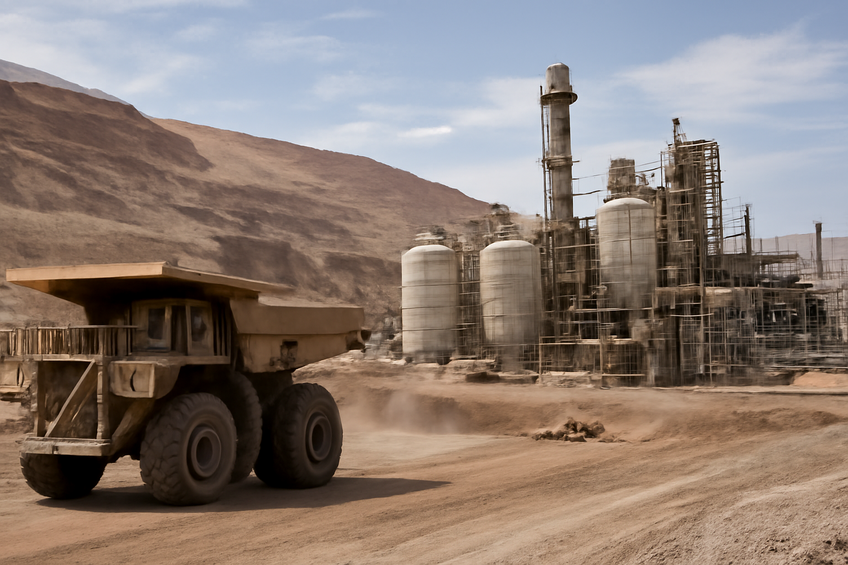
Freshwater Stress Reshapes Mining Operations Across Chile’s Atacama Region
Water scarcity has become one of the defining operational challenges for Chilean copper producers, forcing a structural shift away from freshwater extraction toward large-scale desalination as the primary supply strategy. The Atacama Desert and surrounding northern regions, which host some of the world’s highest-grade copper deposits, also rank among the driest environments on earth — a tension that has only sharpened as ore grades decline and processing volumes rise.
Aquifer depletion and prolonged drought cycles have tightened regulatory restrictions on freshwater use, particularly in the Antofagasta and Atacama regions. Environmental authorities have increased scrutiny of mining concessions that draw from shared underground water systems, pushing producers to treat desalinated seawater not as a supplementary resource but as a baseline requirement for project permitting and long-term operations.
Desalination Infrastructure Becomes a Competitive Necessity
Several of Chile’s largest copper operations have invested heavily in coastal desalination plants paired with high-elevation pumping systems capable of moving treated seawater hundreds of kilometers inland and thousands of meters uphill to mine sites. The engineering scale involved is substantial, and the energy demands are significant — both factors that weigh on operating costs and carbon footprints.
Smaller and mid-tier producers face a different calculus. Building proprietary desalination and conveyance infrastructure requires capital commitments that can rival the cost of mine development itself. This dynamic is accelerating consolidation discussions and third-party water supply agreements, where infrastructure operators sell treated seawater to multiple mining clients along shared pipeline corridors.
Key Drivers Accelerating Project Timelines
- Regulatory pressure: Environmental approvals for new and expanded copper projects increasingly require demonstrable seawater supply plans before permits are granted.
- Aquifer protections: Strengthened indigenous water rights and ecosystem protections around high-altitude wetlands — known as vegas and bofedales — have further constrained freshwater access.
- Declining ore grades: Lower-grade ore requires larger volumes of water per tonne of copper recovered, amplifying total consumption at the processing stage.
- ESG investor expectations: International institutional investors and lenders are applying heightened scrutiny to water governance as a core due-diligence criterion.
- Energy transition demand: Rising global copper demand linked to electrification has motivated producers to protect production continuity against supply-side constraints, including water.
Engineering and Cost Challenges Remain Considerable
Pumping desalinated seawater from Pacific coastal facilities to mine sites situated at altitudes commonly exceeding 2,000 meters — and in some cases above 4,000 meters — represents one of the more energy-intensive logistics challenges in global mining. Power consumption for pumping at high elevations can represent a meaningful share of a mine’s total energy budget, adding pressure on producers to source renewable electricity to manage both costs and emissions.
Advertisement
Renewable Energy Integration
Chile’s expanding solar and wind generation capacity in the northern regions creates an opportunity to couple desalination and pumping operations with low-carbon power. Several producers have structured power purchase agreements that tie renewable generation directly to water infrastructure, reducing long-run operating costs and improving the environmental credentials of their water supply chains. This integrated approach is increasingly viewed as the benchmark for responsible large-scale copper production in arid climates.
Technical and Operational Risks
Desalination plants introduce their own operational dependencies, including seawater intake management, brine disposal, membrane maintenance, and vulnerability to coastal environmental events. Producers must also manage the transition from freshwater-calibrated processing circuits to seawater or blended-water feeds, which can affect reagent chemistry in flotation and leaching operations. Managing chloride content in process water remains an active area of metallurgical engineering focus across the industry.
Regulatory and Community Dynamics
Chile’s water governance framework has undergone significant reform pressure in recent years, with proposed changes to the national Water Code aimed at strengthening public oversight of water rights allocation. For mining companies, navigating this environment requires early and sustained engagement with local communities, indigenous groups, and regional authorities — not only to secure permits but to maintain the social license that underpins long-term operations.
Community concerns have historically centered on the perceived competition between mining water use and domestic or agricultural needs. The shift to seawater desalination, while costly, offers producers a credible response to this concern by demonstrating that operations no longer depend on shared freshwater systems. This reframing has become an important element of stakeholder communication strategies across the sector.
Implications for Chile’s Copper Supply Position
Chile remains the world’s largest copper-producing nation, and the trajectory of its output over the coming decade will be partly determined by how effectively producers solve the water equation. Projects that have secured robust desalination and water conveyance infrastructure are increasingly better positioned for permitting, financing, and long-term operational stability than those still reliant on traditional freshwater sources.
Advertisement
As the global copper market tightens in response to electrification demand, the producers who have moved earliest and most decisively on desalination infrastructure stand to benefit from both regulatory goodwill and uninterrupted production capacity. Water strategy, once a secondary operational concern, has become a core determinant of which Chilean copper projects advance and which remain stranded at the development stage.


