




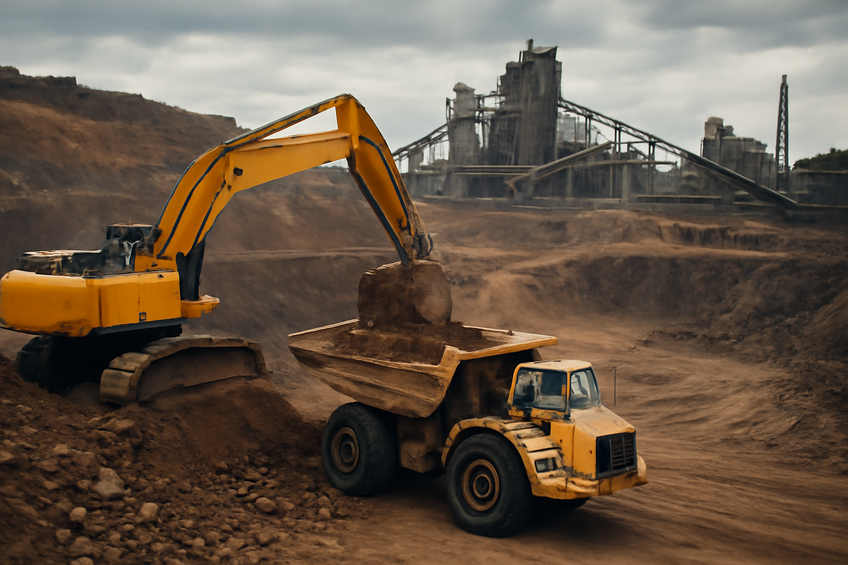
A Critical Gap Between Mining and Manufacturing
Rare earth processing constraints have emerged as one of the most significant vulnerabilities in Western efforts to build sovereign critical minerals supply chains. While governments in North America, Europe, and Australia have accelerated investment in rare earth mining projects over the past several years, the downstream processing infrastructure required to convert ore into usable materials remains heavily concentrated in China — a structural imbalance that undermines the strategic intent of those upstream investments.
Mining a rare earth deposit is only the first step in a long and technically demanding value chain. Before neodymium, dysprosium, or any other rare earth element can be incorporated into a permanent magnet, electric vehicle motor, or defense system component, it must pass through multiple stages of chemical separation, refining, and alloying. Each of those stages requires specialized facilities, reagents, and workforce expertise that the West has largely allowed to atrophy over several decades.
Why Processing Is Harder to Build Than a Mine
The rare earth processing bottleneck is not simply a matter of capital expenditure, though capital requirements are substantial. It reflects a deep concentration of technical knowledge, industrial chemistry expertise, and supply chain relationships that took China decades to develop and that cannot be replicated quickly through policy announcements or grant programs alone.
Technical and Environmental Complexity
Rare earth separation relies on solvent extraction processes that involve large volumes of hazardous chemicals and generate significant volumes of waste, including low-level radioactive material where thorium or uranium co-occurs with the ore body. Permitting and environmental compliance for such facilities is protracted in most Western jurisdictions, adding years to project timelines beyond what a mine alone would face.
The metallurgical complexity also varies considerably depending on the deposit type. Processing clay-hosted ionic adsorption deposits — common in southern China and now being explored in parts of Africa and Southeast Asia — requires different chemistry than processing hard rock deposits such as carbonatites or monazite-bearing placers. Western developers frequently face the challenge of tailoring processing flowsheets to ore bodies without access to established domestic reference cases.
Advertisement
Workforce and Institutional Knowledge Gaps
The rare earth processing workforce that existed in the United States and Europe prior to the 1990s has largely retired or dispersed. University programs in extractive metallurgy have contracted across many Western countries, and the specialized knowledge required to operate solvent extraction circuits at commercial scale is not easily transferred through conventional technical training alone. Rebuilding that human capital base is a parallel challenge that runs alongside the physical infrastructure gap.
The Strategic Consequences for Western Industry
The practical effect of the processing bottleneck is that Western rare earth miners — where they exist — often have limited options for where to send their concentrate. In some cases, material produced at great political and financial effort in North America or Australia has ultimately been shipped to China for processing, which defeats much of the supply chain security rationale that justified the project in the first place.
For downstream manufacturers — particularly in the defense, clean energy, and automotive sectors — the absence of a reliable Western processing base introduces vulnerabilities that are difficult to hedge. Long-term offtake agreements and strategic stockpiles can provide partial buffers, but they do not substitute for industrial-scale processing capacity that can respond to demand shifts and be scaled over time.
Sectors Most Exposed to Supply Disruption
- Defense and aerospace: Permanent magnets made from rare earth elements are critical components in guidance systems, radar, electric motors for submarines, and a range of other defense applications where supply assurance is a national security priority.
- Electric vehicle manufacturing: High-performance traction motors in EVs depend on neodymium-iron-boron magnets. As EV production scales, automakers’ exposure to rare earth processing constraints increases proportionately.
- Wind energy: Direct-drive wind turbines use large permanent magnets, making rare earth supply a meaningful variable in the economics and reliability of turbine manufacturing programs.
- Consumer electronics: Hard drives, speakers, and various precision components contain rare earth-based magnets, though this segment generally operates on shorter product cycles that may allow some material substitution over time.
Policy Responses and Their Limitations
Governments across the Western world have responded to the processing gap with a combination of grant funding, loan guarantees, offtake support, and allied-nation coordination frameworks. Bilateral and multilateral initiatives aimed at building integrated supply chains — from mine to magnet — have gained diplomatic traction, and several processing and refining facilities are in various stages of development across North America and Europe.
However, policy support, however well-structured, cannot compress the physical and regulatory timelines associated with building processing infrastructure. Facilities that are announced today are unlikely to reach meaningful commercial output within the near term, meaning the processing gap will remain a structural feature of Western supply chains for some years regardless of current investment activity.
Advertisement
Recycling and magnet-to-magnet recovery programs offer a supplementary pathway that is gaining industry attention, as recovered material bypasses much of the primary processing chain. Yet recycling volumes remain modest relative to primary demand and are unlikely to close the gap independently.
The trajectory of Western rare earth ambitions will ultimately be decided not at the mine gate but at the processing plant. As project developers, governments, and end-users refine their strategies, the degree to which processing infrastructure can be built, permitted, and staffed at scale will determine whether new mining investment translates into genuine supply chain resilience or remains a well-intentioned but incomplete solution.


